






Back Pain and Common Back Problems
Almost every adult will experience back pain at some point in their lives — most commonly low back pain, which is the leading cause of disability globally according to the World Health Organization.
Back pain can range from mild to severe. It can be short-lived or long-lasting. It can feel sharp or dull and can spread into your legs. Regardless of how it happens, back pain can make some everyday activities difficult or impossible to do.
This page explains some of the common causes of back pain, as well as some general treatment options. Your doctor can give you more detailed information about your back pain and come up with a plan to help relieve your symptoms.
Anatomy
The spine is made up of small bones, called vertebrae, which are stacked on top of one another.
- The cervical spine is made up of seven small vertebrae that begin at the base of the skull and end at the upper chest.
- The thoracic spine is made up of 12 vertebrae that start from the upper chest to the middle back and connect to the rib cage.
- The lumbar spine consists of five larger vertebrae. These vertebrae are larger because they carry more of your body's weight.
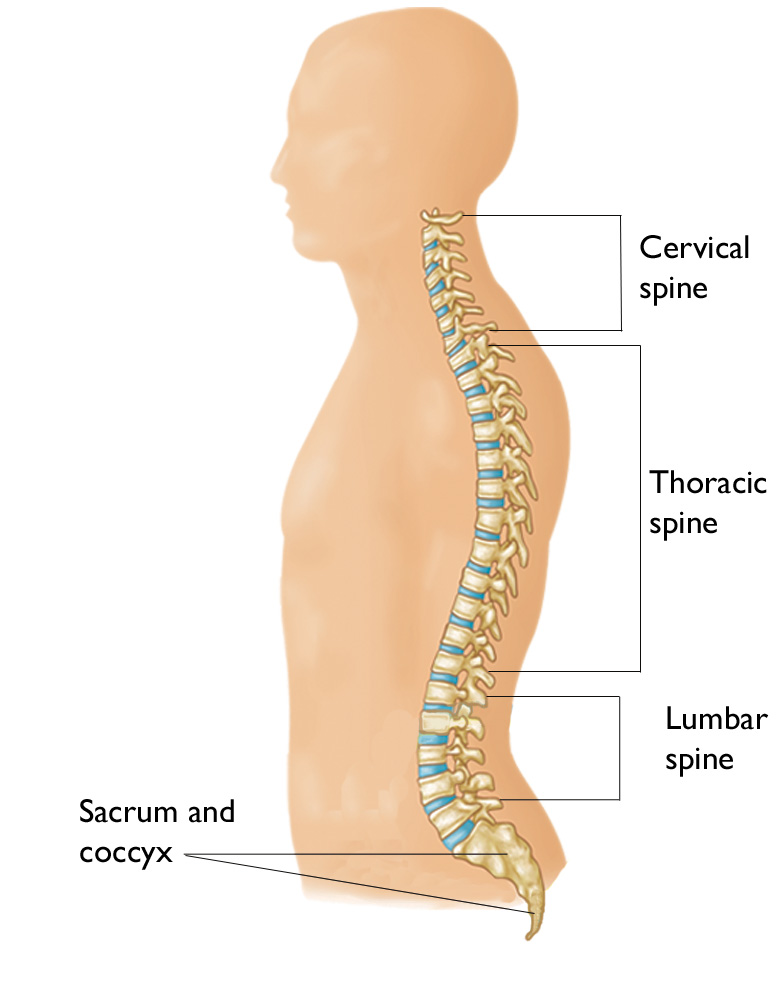
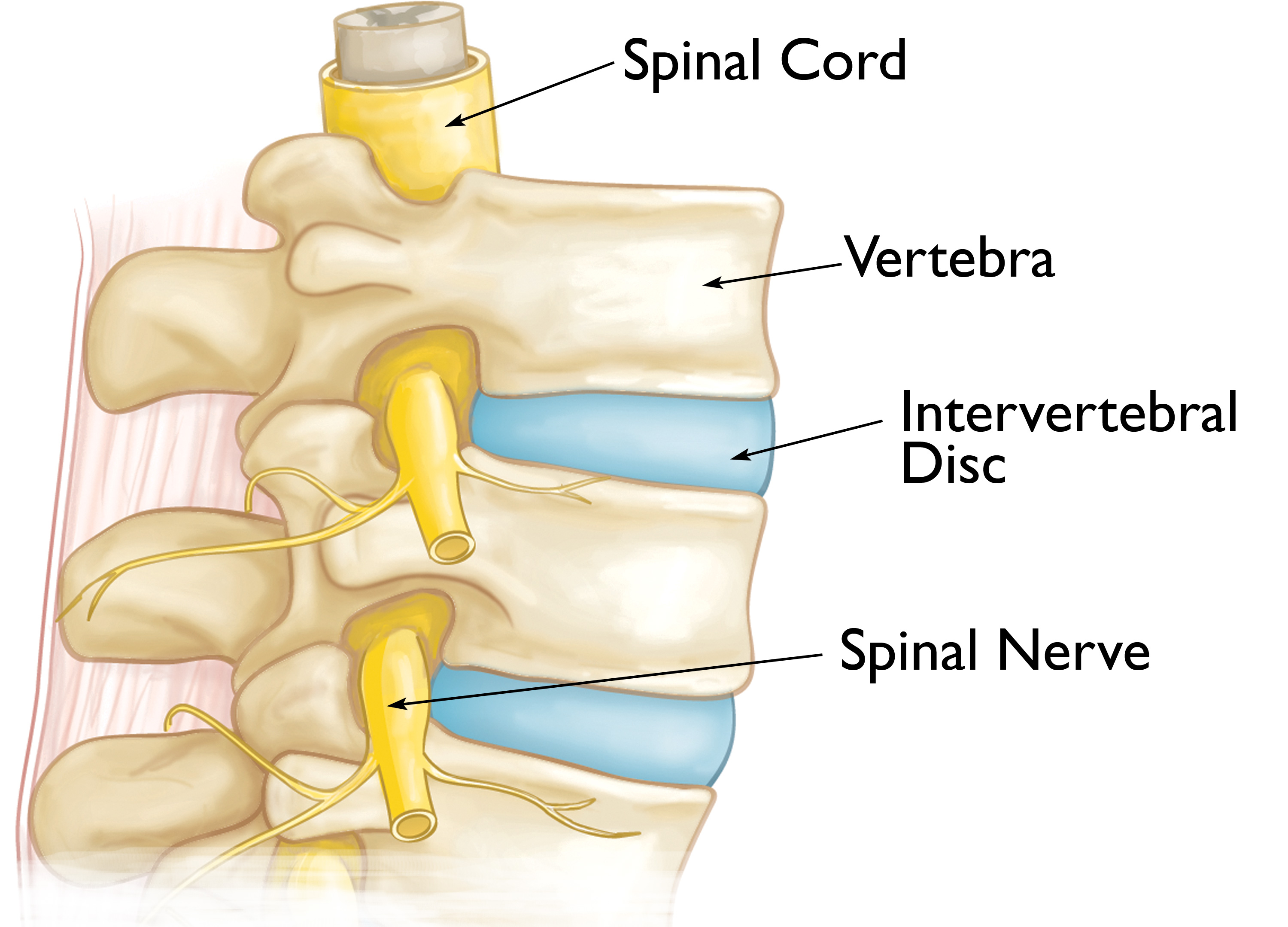
Muscles, ligaments, nerves, and intervertebral disks are additional parts of your spine. The muscles and ligaments help stabilize the bones while the intervertebral disks provide "cushioning" to the spine so it can tolerate various movements and stress you place on your spine.
The nerves that allow communication between your brain and your body are located inside the spine.
Common Causes of Back Pain
Ankylosing spondylitis is a disease that occurs when the immune system attacks bones, ligaments, and joints. This inflammation can cause changes in the spine over a long time, resulting in back pain and less movement in the joints of the spine. People who have ankylosing spondylitis can also have back or hip stiffness that gets better after moving around. Although there is no cure for ankylosing spondylitis, there are many treatment options to manage pain and stay active.
Learn more: Ankylosing Spondylitis
Cauda equina syndrome, a rare disorder affecting the bundle of nerve roots (cauda equina) at the lumbar (lower) end of the spinal cord, is a surgical emergency. It occurs when the nerve roots in the lumbar spine are compressed (squeezed), cutting off sensation and movement. The nerve roots that control the function of the bladder and bowel are especially vulnerable to damage. Without immediate treatment to relieve pressure, it can result in a range of serious problems.
Learn more: Cauda Equina Syndrome
A herniated disk (or ruptured disk) is a condition that can occur anywhere along the spine, but most often occurs in the lower back. A disk begins to herniate when its jelly-like nucleus pushes against its outer ring due to wear and tear or a sudden injury. It is one of the most common causes of lower back pain, as well as leg pain, or sciatica. Although a herniated disk can be very painful, most people feel much better with just a few weeks or months of nonsurgical treatment.
Learn more: Herniated Disk in the Lower Back
Lumbar spinal stenosis is a common cause of low back and leg pain, or sciatica. As we age, the normal wear-and-tear effects of aging can lead to narrowing of the spinal canal, which houses the spinal nerves and spinal cord. This puts pressure on the spinal cord and the spinal nerve roots, and may cause pain, numbness, or weakness in the legs. Arthritis is the most common cause of spinal stenosis.
Learn more: Lumbar Spinal Stenosis
Sciatica is a very broad term describing nerve pain, not a specific diagnosis. Sciatic pain occurs when the nerve root in the lumbar spine is compressed, such as by a herniated disk or narrowing of the spinal canal (spinal stenosis). You may suddenly start feeling pain in your lower back or hip that radiates to the back of your thigh and into your leg.
Learn more: Sciatica - Causes & Treatment
Spinal fractures from osteoporosis most often happen in the spine. These spine fractures — called vertebral compression fractures — happen about 1.5 million times every year in the U.S. They are almost twice as common as other fractures linked to osteoporosis, like hip fractures and wrist fractures. Not all spinal compression fractures are caused by osteoporosis. But when they are, the fracture is often the first sign that a person has weak bones.
Learn more: Osteoporosis and Spinal Fractures
Spinal fractures related to trauma can vary widely in severity and treatment. They can be caused by a high-energy trauma, such as a motor vehicle collision; or a low-energy event, such as a minor fall, in an older person whose bones are weakened by osteoporosis. Most spinal fractures occur in the thoracic and lumbar spine, or at the connection of the two (called the thoracolumbar junction).
Learn more: Fractures of the Thoracic and Lumbar Spine
In spondylolisthesis, one of the bones in your spine — called a vertebra — slips forward and out of place. This may occur anywhere along the spine, but is most common in the lower back (lumbar spine). In some people, this causes no symptoms at all. Others may have back and leg pain that ranges from mild to severe.
Learn more: Adult Spondylolisthesis in the Low Back
Treatments for Back Pain
Many patients with back pain will respond to simple treatment methods such as altering activities, rest, physical therapy, and medication. However, surgery may be required to resolve some spine and back problems.
These are some of the nonsurgical and surgical treatments commonly used to treat back pain. Some procedures can be done in the doctor's office or in the operating room on an outpatient basis, while others require a hospital stay.
- Anterior Lumbar Interbody Fusion (ALIF)
- Lumbar Artificial Disk Replacement
- Awake Spinal Surgery
- Bone Grafts in Spine Surgery
- Endoscopic Diskectomy
- Lateral Lumbar Interbody Fusion
- Minimally Invasive Spine Surgery
- Outpatient Spine Surgery
- Platelet-Rich Plasma (PRP)
- Posterior Lumbar Interbody Fusion and Transforaminal Lumbar Interbody Fusion
- Posterolateral Lumbar Fusion
- Spinal Fusion
- Spinal Injections
- Spine Conditioning Program
- What Are NSAIDs?
Because each patient is unique, your doctor will develop a treatment plan that is best for your condition and overall health, and that aligns with your goals.
AAOS does not endorse any treatments, procedures, products, or physicians referenced herein. This information is provided as an educational service and is not intended to serve as medical advice. Anyone seeking specific orthopaedic advice or assistance should consult his or her orthopaedic surgeon, or locate one in your area through the AAOS Find an Orthopaedist program on this website.