






Diseases & Conditions
Trigger Finger
Trigger finger, also called stenosing tenosynovitis, is a condition affecting tendons in your fingers or thumbs that prevents them from bending normally. It causes a sensation of catching, locking, or "triggering" of the finger or thumb when you try to bend or straighten them. It can also cause pain and stiffness.
Trigger finger affects 2% of the general population. It can occur in one or multiple fingers and in one or both hands. It is most common in the ring finger and thumb but can affect any finger. When the thumb is involved, the condition is called "trigger thumb."
Anatomy of the Finger
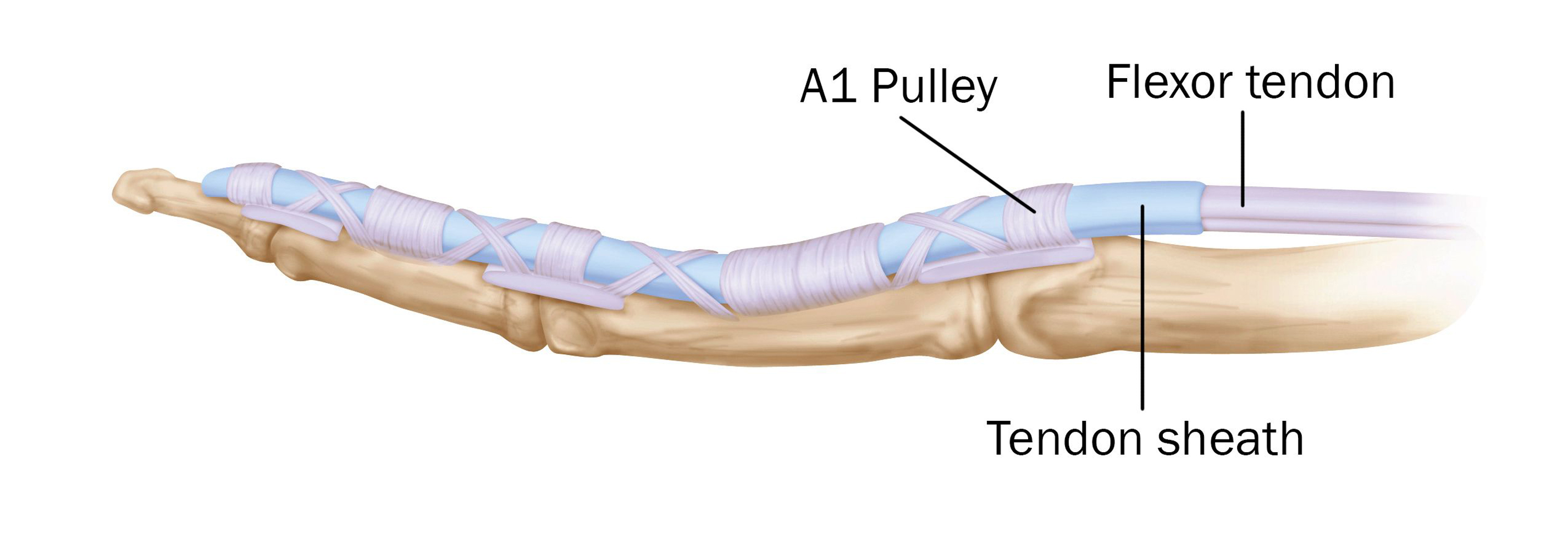
The flexor tendons are long cord-like structures that connect the muscles of the forearm to the bones of the fingers and thumb. When you bend your fingers, flexor tendons on the palm side of your hand pull on the fingers into a fist.
Each tendon passes through a series of tunnels called pulleys that hold the tendons close to the bone, similar to how a fishing line passes through guides on a fishing rod. The A1 pulley sits in your palm at the base of each finger; it is the pulley most involved in trigger finger.
What Is Trigger Finger?
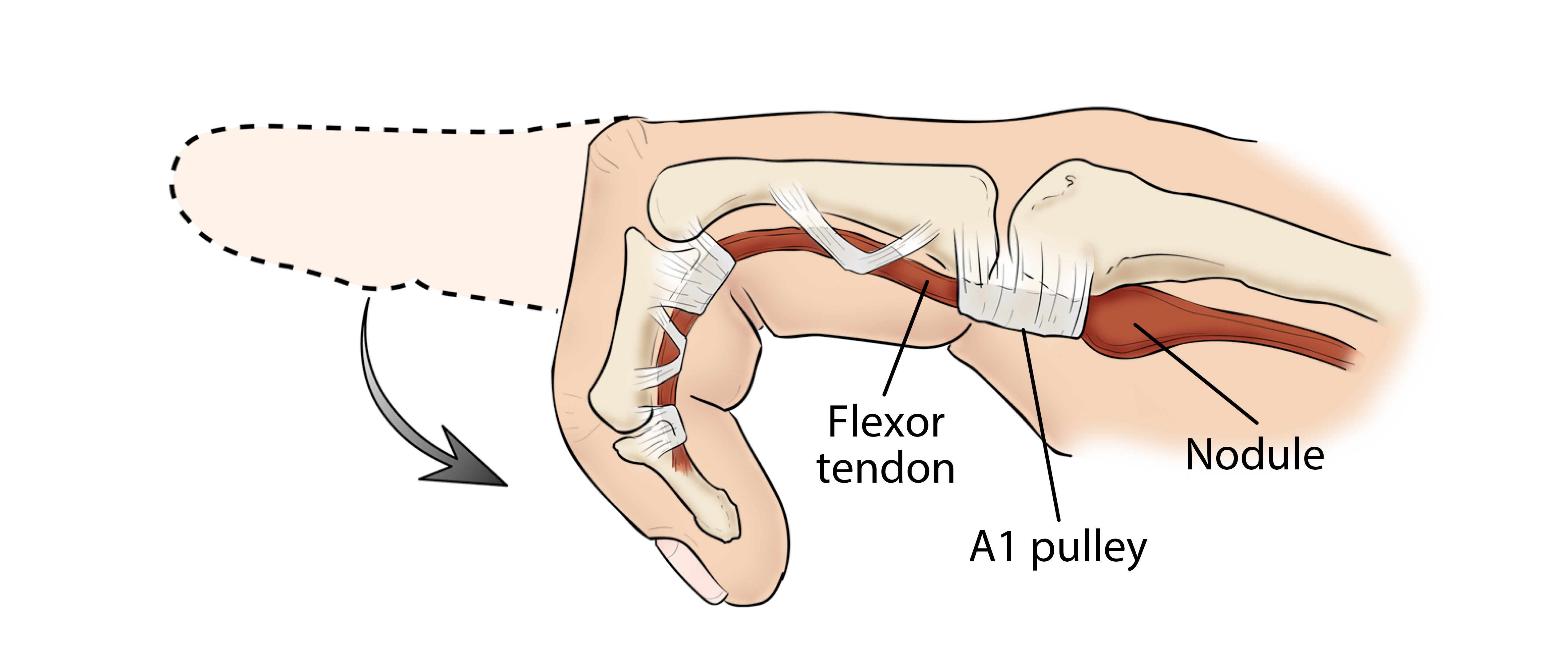
In trigger finger, there is a size mismatch between the tendons of the finger and the A1 pulley.
Tendons may become thickened or develop a bump, and the A1 pulley may also become thickened and narrowed, leaving less room for the tendon to pass through. When this happens, the tendon can no longer glide smoothly through the tunnel, leading to catching or locking. This is often painful.
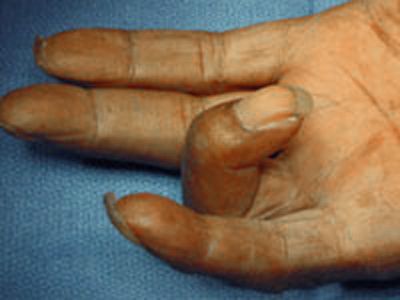
In some cases of trigger finger, the finger locks and remains bent. Sometimes, you need to use your other hand to straighten the finger or thumb manually. In the worst cases, the finger cannot be straightened at all without a doctor's help.
Causes of Trigger Finger
Most cases of trigger finger have no clear cause. Symptoms often start on their own without any change in activity. Anyone can get trigger finger, but it is more common in:
- Women between the ages of 40 and 60. Trigger finger is rare in children, though a condition called congenital trigger thumb can cause a child's thumb to lock in flexion (when it is bent).
- People with certain medical conditions, such as diabetes, rheumatoid arthritis, and amyloidosis.
- People who do repetitive gripping or pinching activities, either for work or recreation.
- People who have certain differences in tendon structure.
Symptoms of Trigger Finger
Symptoms of trigger finger often start slowly and get worse over time.
Symptoms may include:
- A tender lump at the base of the finger or thumb on the palm side of the hand
- A catching, popping, or locking sensation with finger or thumb movement
- Pain below your finger when bending or straightening the digit; the pain can travel up into your finger or down into your palm
- The finger getting stuck in a bent position
Stiffness and locking tend to be worse after periods of inactivity, such as when you wake up in the morning. Symptoms may improve throughout the day with consistent, gentle use of the hand.
Diagnosing Trigger Finger
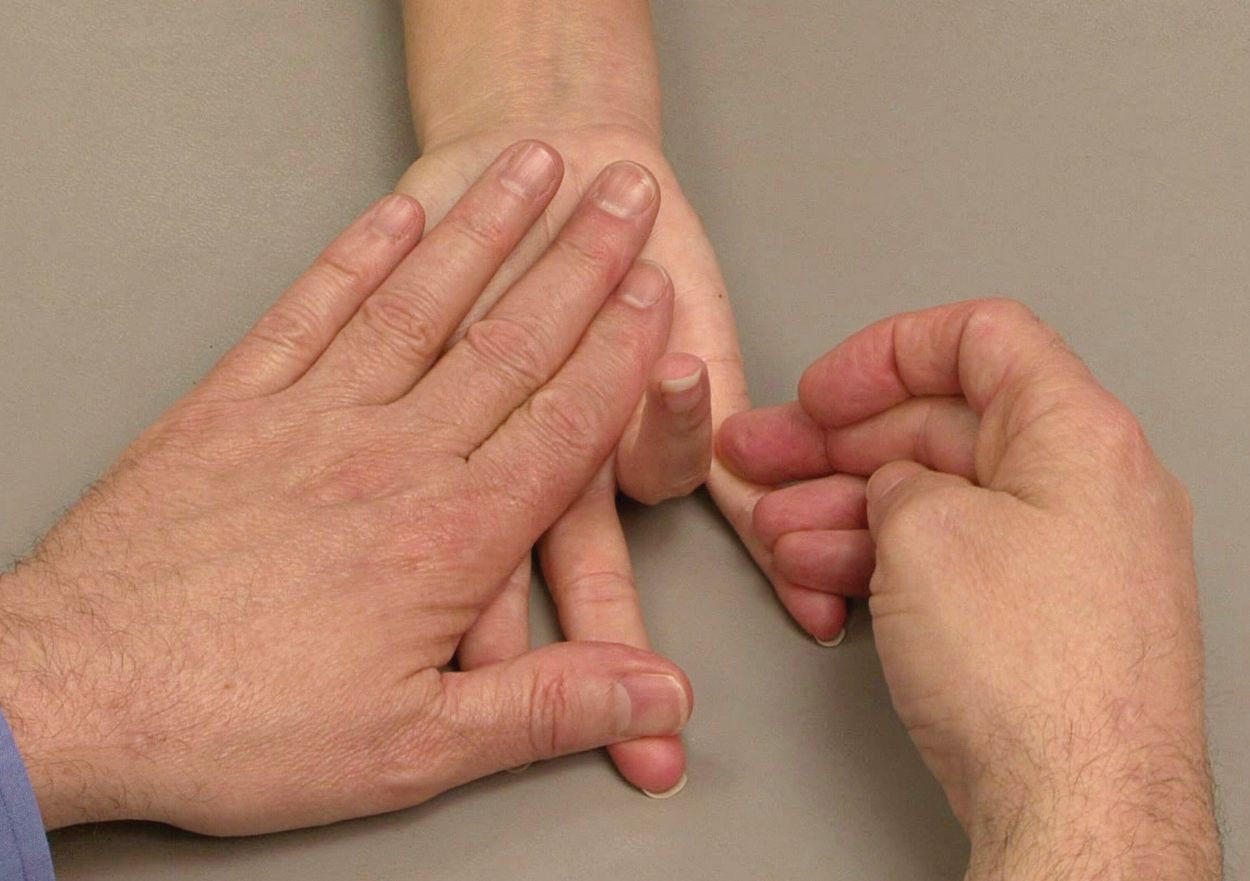
Your doctor will typically be able to diagnose a trigger finger by talking to you about your symptoms and examining your hand. Typically, X-rays or other tests are not needed to make the diagnosis.
During the exam, your doctor will look for:
- Tenderness over the flexor tendon sheath in the palm of your hand
- Thickening or swelling of the tendon sheath at the base of your finger or thumb
- A clicking or catching sensation when you bend and straighten your finger or thumb
Treatment of Trigger Finger
Nonsurgical Treatment
The goal of treatment is to reduce pain and help the tendon glide more freely. Most trigger fingers respond well to nonsurgical treatment.
First-Line Treatments
Activity modification. Rest your hand and avoid activities like repetitive gripping or pinching.
Splinting. Wear a splint at night to keep the affected finger or thumb in a straight position while you sleep.
Anti-inflammatory medications. Taking nonsteroidal anti-inflammatory drugs (NSAIDs), like ibuprofen or naproxen, can help with pain and inflammation. Acetaminophen is another option if you cannot take NSAIDs.
Exercises. Gentle stretching exercises can help decrease stiffness and improve range of motion.
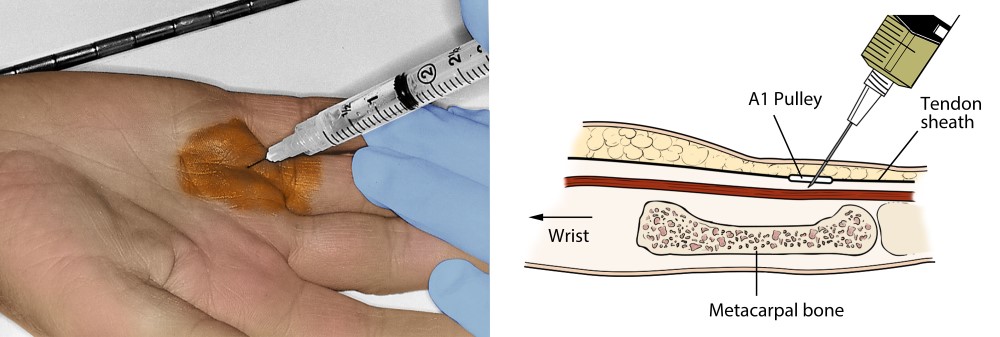
Steroid injections. Another first-line treatment may be a steroid injection. Corticosteroid, or cortisone, is a powerful anti-inflammatory agent that can be injected into the base of the affected finger in the doctor's office. In many cases, the injection can resolve the condition. If symptoms do not improve with one injection or improve but then come back after a period of time, up to three injections may be given. If injections do not help the problem, surgery is often recommended.
Steroid injections are less likely to work — but may still help — in people with diabetes, in those with longstanding triggering, or in those with trigger thumbs. The steroid will typically cause an increase in blood sugar for about 10 to 14 days in diabetics who take insulin, so blood sugar levels in people with diabetes should be monitored closely.
Surgical Treatment
Surgery may be needed if:
- Your trigger finger symptoms are severe or do not get better with other treatments.
- Your finger is stuck in a bent position and cannot be straightened
The surgical procedure for trigger finger is called a trigger finger release.
About Trigger Finger Release
Trigger finger release is an outpatient procedure, meaning you come in and go home the same day. Before the procedure, the area is numbed with a shot. You can be awake or lightly sedated.
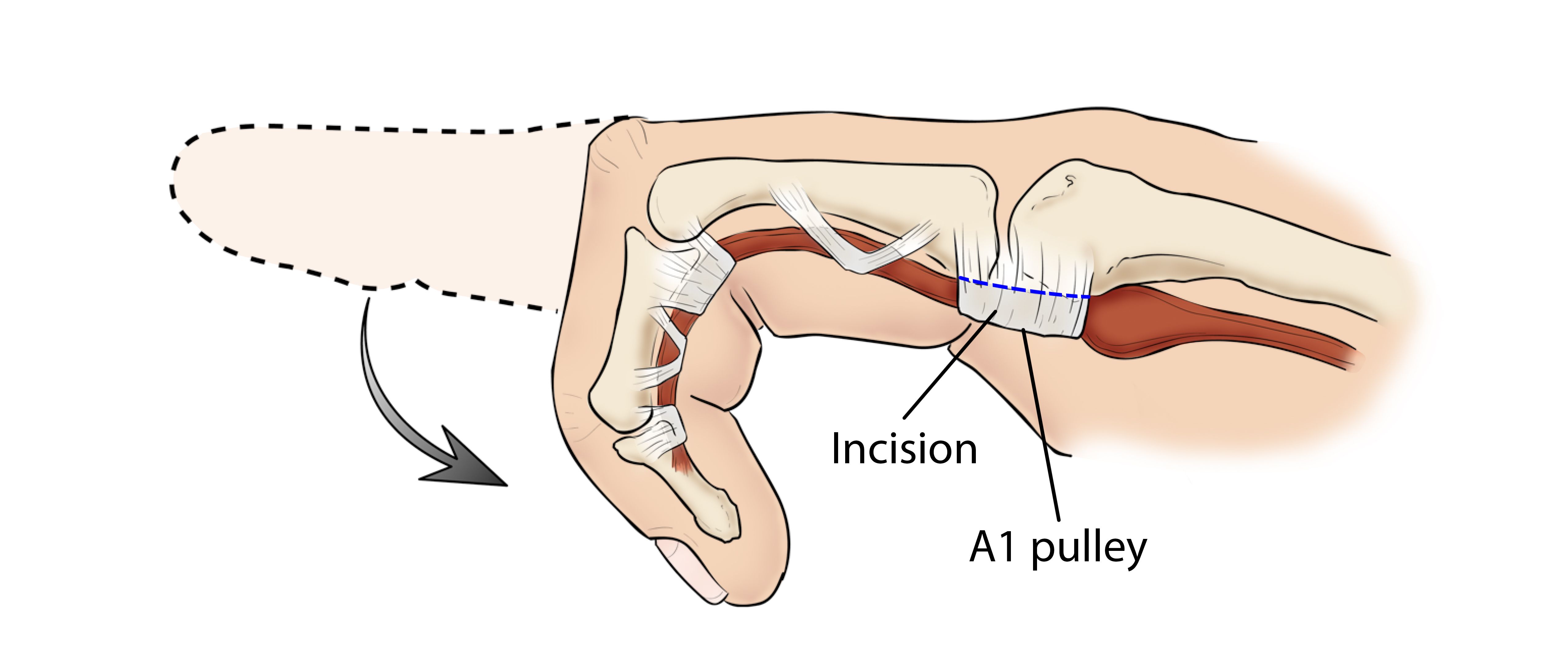
Your doctor will make a small cut in your palm or use the tip of a needle to open up the A1 pulley. This gives the tendon more room to move freely. Opening the A1 pulley does not hurt hand function as long as the other pulleys are left in place.
Occasionally, your doctor will need to remove part of a tendon if opening the A1 pulley does not resolve the triggering. This is more likely in patients who have had triggering for a long time.
Complications. Your doctor will discuss the risks of the surgery with you before the procedure.
- Some pain and swelling after surgery is normal and should improve with time.
- Complications are rare but can include infection, stiffness, or return of symptoms.
Recovery. Most patients are told to start moving their fingers immediately after surgery.
Some soreness in your palm is normal after your procedure. Keeping your hand raised above your heart can help reduce pain and swelling.
Your incision will usually heal within a few weeks, but it may take 4 to 6 months for swelling and stiffness to go away completely.
On average, people feel fully recovered 6 months after surgery. If stiffness, swelling, or pain do not improve, your doctor may want you to see a hand therapist.
Outcomes for Trigger Finger
Most people with trigger finger improve with the right treatment, whether it is nonsurgical or surgical. Early intervention and following your treatment plan are key to successful recovery.
Contributed and/or Updated by
Peer-Reviewed by
AAOS does not endorse any treatments, procedures, products, or physicians referenced herein. This information is provided as an educational service and is not intended to serve as medical advice. Anyone seeking specific orthopaedic advice or assistance should consult his or her orthopaedic surgeon, or locate one in your area through the AAOS Find an Orthopaedist program on this website.