






Hip Pain and Common Hip Problems

The hip is one of the body's largest joints, and one of the hardest-working: It supports your body weight, helps you maintain your balance, and enables you to move your torso and legs in lots of different ways.
Many issues can affect the hip, from overuse injuries to fractures to arthritis. The pain, loss of movement, and other symptoms you experience may be temporary, or they may continue and require medical diagnosis and treatment.
This page explains some of the common causes of hip pain, as well as some general treatment options. Your doctor can give you more detailed information about your hip pain and come up with a plan to help relieve your symptoms.
Anatomy
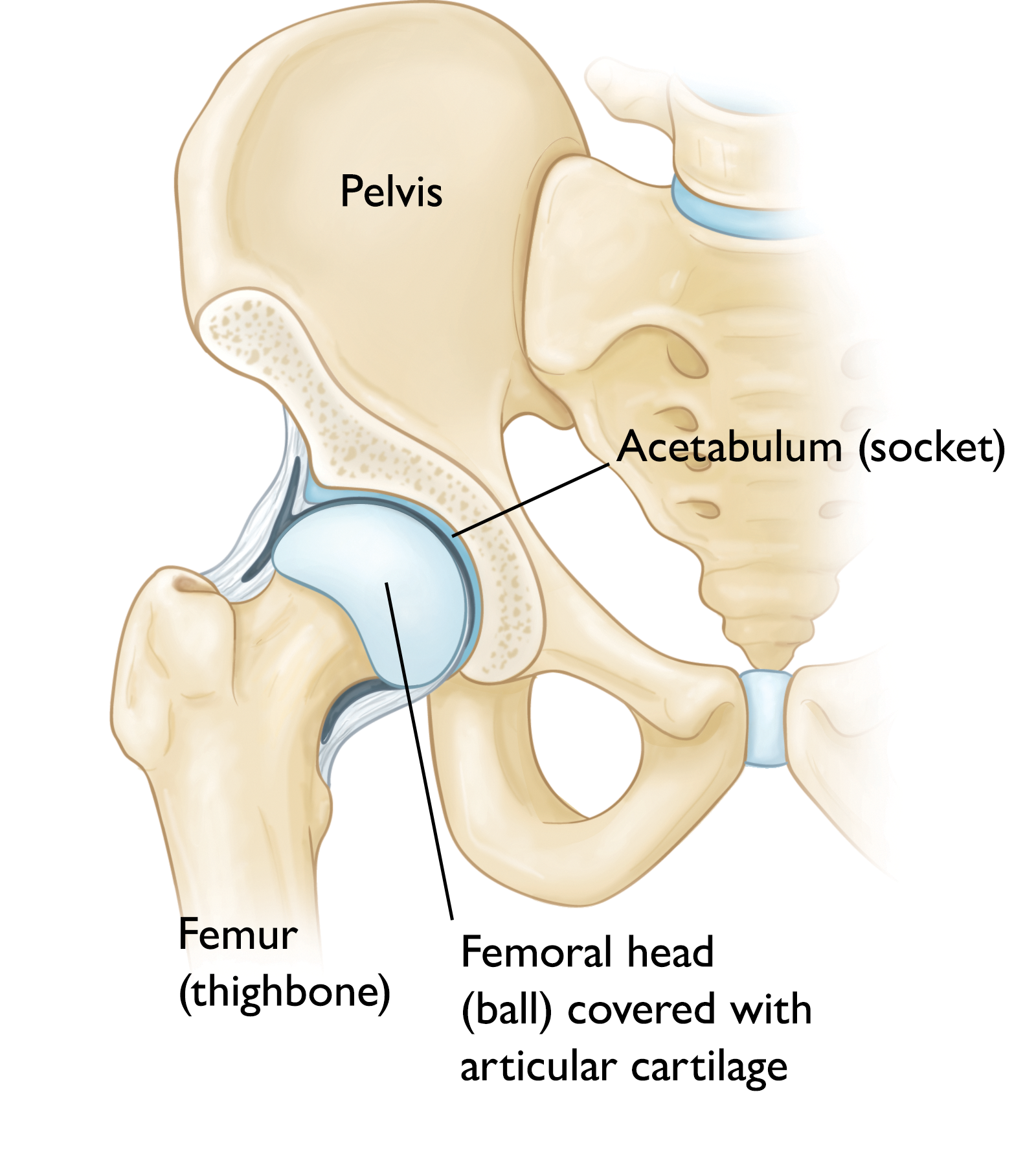
The hip is a ball-and-socket joint.
- The socket is formed by the acetabulum, which is part of the pelvis bone.
- The ball is the femoral head, which is the upper end of the femur (thighbone).
The bone surfaces of the ball and socket are covered with articular cartilage, a smooth tissue that cushions the ends of the bones and enables them to move easily.
A thin tissue called the synovial membrane surrounds the hip joint. In a healthy hip, this membrane makes a small amount of fluid that lubricates the cartilage and eliminates almost all friction during hip movement.
Bands of tissue called ligaments (the hip capsule) connect the ball to the socket and provide stabilityto the joint.
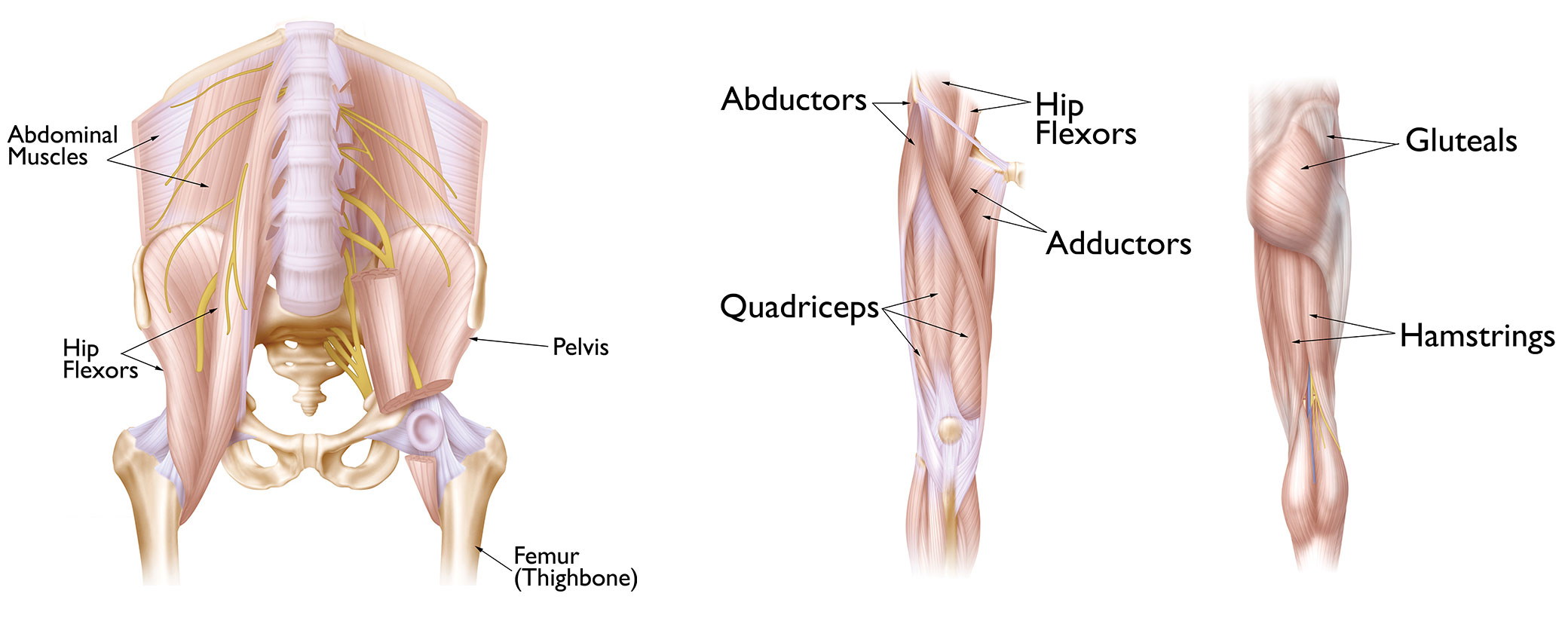
In addition, the femur (thighbone) and pelvis serve as anchors for several muscles.
- Some of these muscles move across the abdomen or the buttocks (hip flexors, gluteals).
- Others move down the thigh to the knee (tensor fasciae latae [TFL], adductors, quadriceps, hamstrings).
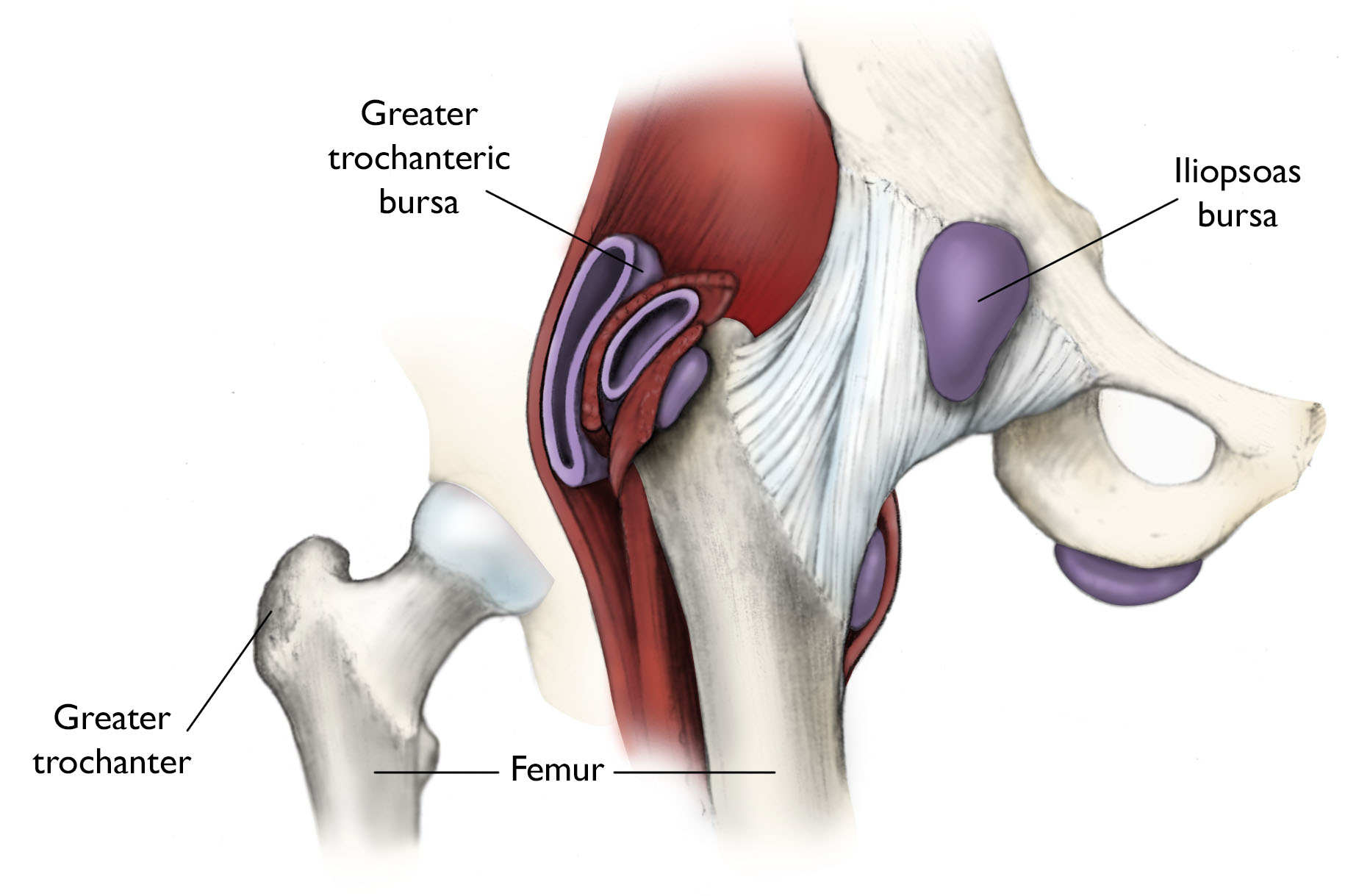
Bursae are small, jelly-like sacs that are located throughout the body, including around the shoulder, elbow, hip, knee, and heel. They contain a small amount of fluid, and are positioned between bones and soft tissues, acting as cushions to help reduce friction during joint motion.
- The trochanteric bursa covers the bony point of the hip.
- The iliopsoas bursa is located on the inside of the hip.
Common Causes of Hip Pain
Arthritis
This is the most common cause of chronic hip pain and disability. Osteoarthritis, rheumatoid arthritis, and posttraumatic arthritis are the most common forms of this disease.
- Osteoarthritis. This is an age-related wear-and-tear type of arthritis. It usually occurs in people 50 years of age and older and often in individuals with a family history of arthritis. The cartilage cushioning the bones of the hip wears away. The bones then rub against each other, causing hip pain and stiffness. Osteoarthritis may also be caused or accelerated by subtle irregularities in how the hip developed in childhood.
- Rheumatoid arthritis. This is an autoimmune disease in which the synovial membrane becomes inflamed and thickened. This chronic inflammation can damage the cartilage, leading to pain and stiffness. Rheumatoid arthritis is the most common type of a group of disorders termed inflammatory arthritis.
- Posttraumatic arthritis. This can follow a serious hip injury or fracture. The cartilage may become damaged and lead to hip pain and stiffness over time.
- Osteonecrosis. An injury to the hip, such as a dislocation or fracture, may limit the blood supply to the femoral head. This is called osteonecrosis (also sometimes referred to as avascular necrosis). The lack of blood may cause the surface of the bone to collapse, and arthritis will result. Some diseases can also cause osteonecrosis.
- Childhood hip disease. Some infants and children have hip problems. Even though the problems are successfully treated during childhood, they may still cause arthritis later in life. This happens because the hip may not grow normally, and the joint surfaces are affected. Learn more: Developmental Dysplasia of the Hip (DDH), Adolescent Hip Dysplasia
Soft Tissue Injuries
Hip bursitis. Bursitis is a condition that involves inflammation of the bursa. There are many potential causes of hip bursitis, from overuse to an inflammatory condition like rheumatoid arthritis. It occurs most commonly in women and middle-aged or elderly people and is less common in younger people and in men.
Learn more: Hip Bursitis
A hip strain occurs when one of the muscles and/or tendons supporting the hip joint stretches beyond its limit or tears. Strains may be mild, moderate, or severe, depending on the extent of the injury. A severe strain can limit your ability to move your hip.
Anyone can experience a hip strain just doing everyday tasks, but strains most often occur during sports activities or exercise. Although many hip strains improve with simple home treatment, severe strains may require physical therapy or other medical treatment.
Learn more: Hip Strains
Snapping hip is a condition in which you feel a snapping sensation or hear a popping sound in your hip when you walk, get up from a chair, or swing your leg around.
The snapping sensation occurs when a muscle or tendon (the strong tissue that connects muscle to bone) moves over a bony protrusion (knob) in your hip.
Although snapping hip is usually painless and harmless, the sensation can be annoying. In some cases, snapping hip leads to bursitis, a painful swelling of the fluid-filled sacs that cushion the hip joint.
Learn more: Snapping Hip
Fractures and Dislocations
A hip fracture is a break in the upper portion of the femur (thighbone). Most hip fractures occur in elderly patients whose bones have become weakened by osteoporosis. When a hip fracture occurs in a younger patient, it is typically the result of a high-energy event, such as a fall from a height or motor vehicle/motorcycle collision.
Hip fractures can be very painful, and most hip fractures require surgical treatment. Only a very small group of nondisplaced fractures in healthy patients can be treated without surgery, while a separate small group of patients may be too sick to safely have surgery.
Learn more: Hip Fractures
An acetabular fracture is a break in the socket portion of the "ball-and-socket" hip joint. These hip socket fractures are not common — they occur much less frequently than fractures of the upper femur or femoral head (the "ball" portion of the joint).
The majority of acetabular fractures are caused by some type of high-energy event, such as a motor vehicle collision. In a smaller number of cases, a low-energy incident, such as a fall from standing, may cause an acetabular fracture in an older person who has weaker bones. People with osteoporosis are at increased risk of acetabular fractures from low-energy incidents.
Treatment for acetabular fractures often involves surgery to restore the normal anatomy of the hip and stabilize the hip joint.
Learn more: Acetabular Fractures
A traumatic hip dislocation occurs when the head of the thighbone (femur) is forced out of its socket in the hip bone (pelvis). It typically takes a major force to dislocate the hip. Car accidents and falls from significant heights are common causes and, as a result, other injuries like broken bones often occur with the dislocation.
A hip dislocation is a serious medical emergency. Immediate treatment is necessary.
Learn more: Hip Dislocation
Sometimes, a fracture can occur around or near a total hip replacement implant. This is called a periprosthetic fracture. Although uncommon, the ball of the hip implant can sometimes come out of the socket, or dislocate.
Learn more: Fracture After Total Hip Replacement
Learn more: Dislocation After Total Hip Replacement (Video)
Other conditions that can cause hip pain include:
Femoroacetabular impingement (FAI) is a condition in which extra bone grows along one or both of the bones that form the hip joint — giving the bones an irregular shape. Because they do not fit together perfectly, the bones rub against each other during movement. Over time this friction can damage the joint, causing pain and limiting activity.
Learn more: Femoroacetabular Impingement
Heterotopic ossification (HO) of the hip is the formation of extra bone outside the normal locations on the skeleton. This process can result from direct injury to soft tissues, such as after surgery or a fall. HO can also happen after a neurologic injury, such as a brain or spinal cord injury. Patients with burns or blast injuries are also vulnerable to this condition.
There is no cure for heterotopic ossification; however, there are treatments that can lessen its effect on your overall function and keep it from coming back.
Learn more: Heterotopic Ossification of the Hip
Treatments for Hip Pain and Conditions
Many patients with hip pain will respond to simple treatment methods such as altering activities, rest, physical therapy, and medication. However, surgery may be required to resolve some hip problems.
These are some of the nonsurgical and surgical treatments commonly used to treat hip pain. Some procedures can be done in the doctor's office or in the operating room on an outpatient basis, while others require a hospital stay.
- Cortisone Shot (Steroid Injection)
- Hip Arthroscopy
- Hip Conditioning Program
- Hip Resurfacing
- Minimally Invasive Total Hip Replacement
- Platelet-Rich Plasma (PRP)
- Revision Total Hip Replacement
- Total Hip Replacement
- What Are NSAIDs?
Because each patient is unique, your doctor will develop a treatment plan that is best for your condition and overall health, and that aligns with your goals.
AAOS does not endorse any treatments, procedures, products, or physicians referenced herein. This information is provided as an educational service and is not intended to serve as medical advice. Anyone seeking specific orthopaedic advice or assistance should consult his or her orthopaedic surgeon, or locate one in your area through the AAOS Find an Orthopaedist program on this website.