






Foot and Ankle Pain and Common Problems

During standing, walking, and running, the foot and ankle provide support, shock absorption, balance, and several other functions that are essential for motion.
Many issues can cause foot and ankle pain, from aging-related wear and tear to traumatic injuries such as sprains and fractures. Whatever the cause, foot and ankle pain can affect your ability to work, play sports, and lead an active life.
This page explains some of the common causes of foot and ankle pain as well as some general treatment options. Your doctor can give you more detailed information about your pain and come up with a plan to help relieve your symptoms.
Anatomy
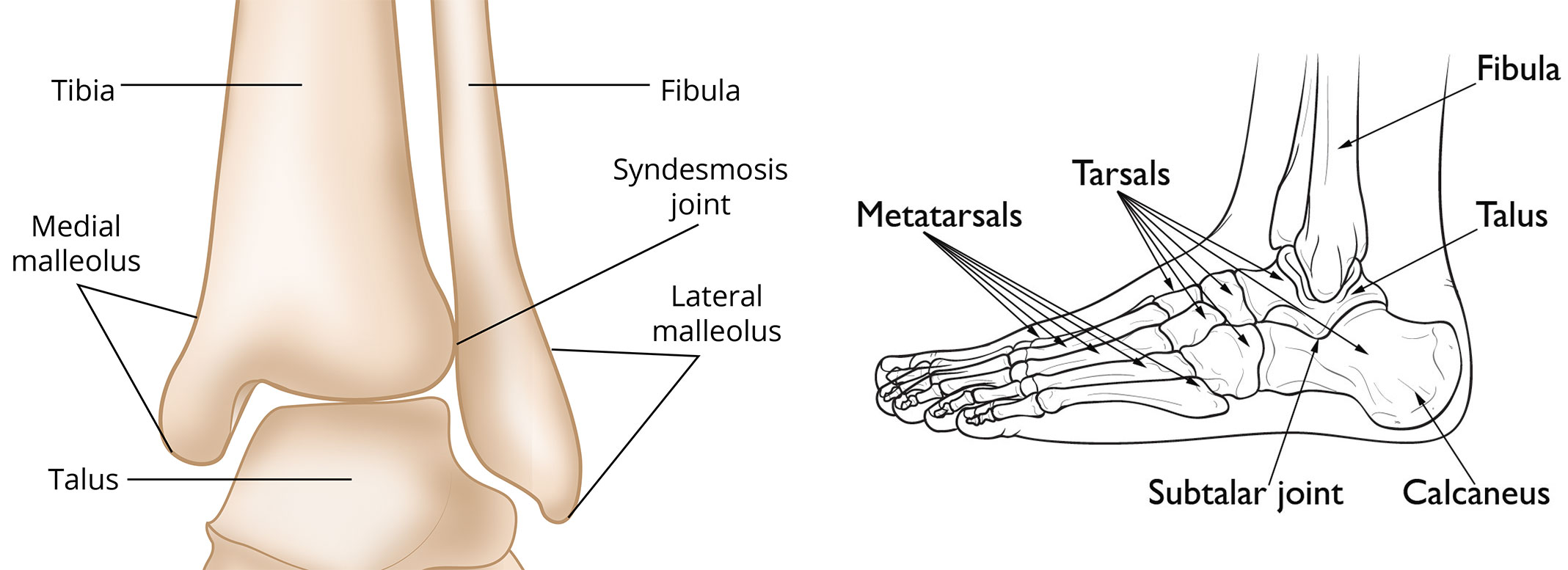
In many of these joints, the ends of the bones are covered with articular cartilage — a slippery substance that helps the bones glide smoothly over each other during movement. Joints are surrounded by a thin lining called the synovium. The synovium produces a fluid that lubricates the cartilage and reduces friction.
Tough bands of tissue, called ligaments, connect the bones and provide stability to the joints. Muscles and tendons also support the joints and provide the strength to make them move.
Common Causes of Foot and Ankle Pain
Arthritis
There are more than 100 forms of arthritis, many of which affect the foot and ankle. All types can make it difficult to walk and perform activities you enjoy. Although there is no cure for arthritis, there are many treatment options available to slow the progression of the disease and relieve symptoms.
Learn more:
- Arthritis of the Foot and Ankle
- Hallux Rigidus (Stiff Big Toe)
- Rheumatoid Arthritis of the Foot and Ankle
Deformities
A bunion is a painful bony bump that develops on the inside of the foot at the big toe joint. Bunions usually develop slowly, but as they worsen, they may make it painful to wear shoes or walk.
Learn more: Bunions
Claw toe is a common foot deformity. Having claw toe means your toes "claw," or curl, digging down into the soles of your shoes and creating painful calluses. Claw toe gets worse without treatment and may become a permanent deformity over time.
Learn more: Claw Toe
A hammer toe is a deformity in which the toe is bent at the middle joint so it resembles a hammer. Initially, hammer toes are flexible and can be corrected with simple measures; however, if left untreated, they can become fixed and require surgery.
Learn more: Hammer Toe: Comprehensive Guide
Fractures and Dislocations
An ankle fracture can range from a simple break in one bone to several fractures, which can be disabling and may require surgery. Although ankle fractures can occur in people of all ages, they typically happen more often in adults.
Learn more: Ankle Fractures (Broken Ankle)
A stress fracture is a small crack in a bone, or severe bruising within a bone. Most stress fractures are caused by overuse and repetitive activity; they are common in runners and athletes who participate in running-intensive sports. Pain usually develops gradually and is worse during weightbearing activities.
Learn more: Stress Fractures of the Foot and Ankle
Toe and forefoot fractures are quite common. They can result from a direct blow to the foot or repetitive stress during high-impact activities like running. Although painful, these fractures will usually heal with rest and a change in activities; they rarely require surgery.
Learn more: Toe and Forefoot Fractures
Lisfranc (midfoot) injuries can vary widely — from a simple injury involving one midfoot joint (easily mistaken for a sprain) to a complex injury involving many midfoot joints and broken bones. Even a simple Lisfranc injury is a severe injury that may take many months to heal and may require surgery to treat.
Learn more: Lisfranc (Midfoot) Injury
Soft Tissue Injuries
Achilles tendinitis is a common condition that occurs when the large tendon that runs down the back of the lower leg becomes irritated and inflamed. There are two types of Achilles tendinitis, noninsertional and insertional, which can occur separately or at the same time.
Learn more: Achilles Tendinitis
Achilles tendon tears often occur from an injury to the tendon, typically when the calf muscle is stretched too quickly. Small tears in the Achilles tendon can be bothersome and can cause pain during activity. However, a large or full tear of the Achilles tendon is a disabling injury.
Learn more: Achilles Tendon Rupture (Tear)
Ankle sprains are common injuries that occur among people of all ages and at all activity levels. The severity of symptoms — including pain, swelling, bruising, and ankle instability — and the treatment approach will depend on the degree of the sprain.
Learn more: Sprained Ankle
Plantar fasciitis (fashee-EYE-tiss) occurs when pressure on the plantar fascia damages or tears the tissue, causing irritation and inflammation. You will feel pain on the bottom of your foot near the heel that may be worse after exercise or activity, after a long period of rest, or with the first few steps after getting out of bed in the morning.
Learn more: Plantar Fasciitis and Bone Spurs
Treatments for Foot and Ankle Pain
Many patients with foot and ankle pain will respond to simple treatment methods such as altering activities, rest, physical therapy, and medication. However, surgery may be required to resolve some foot and ankle problems.
These are some of the nonsurgical and surgical treatments commonly used to treat foot and ankle pain. Other treatments are covered in the condition articles listed above.
- Bunion Surgery
- Casts and Splints
- Cortisone Shot (Steroid Injection)
- Foot and Ankle Conditioning Program
- Orthotics
- What Are NSAIDs?
Because each patient is unique, your doctor will develop a treatment plan that is best for your condition and overall health, and that aligns with your goals.
AAOS does not endorse any treatments, procedures, products, or physicians referenced herein. This information is provided as an educational service and is not intended to serve as medical advice. Anyone seeking specific orthopaedic advice or assistance should consult his or her orthopaedic surgeon, or locate one in your area through the AAOS Find an Orthopaedist program on this website.