






Staying Healthy
Driving Safety
Traffic accidents are a major cause of serious injury and death in America. Every day, orthopaedic surgeons see the horrible aftermath of people who choose to drive while under the influence of alcohol or drugs, or do not wear safety belts.
You can reduce this tragic toll by obeying traffic safety rules, driving defensively, and keeping your vehicle in good mechanical condition. Most importantly, wear safety belts, do not drink and drive, do not text and drive, and always be aware of how medications you are taking might impact your driving.
Avoid Distractions When Driving
Many things can distract people when they are driving — children, pets, the radio. As wireless technology has expanded, driving distractions have increased to include a range of hand-held devices, such as cell phones, personal digital assistants, and mp3 players.
According to the NHTSA,the most commonly performed potentially distracting behaviors while driving are:
- Talking to other passengers in the vehicle
- Adjusting the car radio
- Eating/drinking
- Making/accepting phone calls
- Interacting with children in the back seat
- Using a portable music player
On any given day, approximately 600,000 drivers use a hand-held cell phone at some point during their trip.
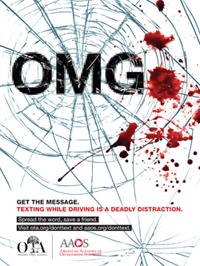
Of particular concern is the growth of texting while driving. According to the NHTSA, respondents younger than age 25 report a higher likelihood of sending text messages while driving than do older drivers. In addition, texting while driving makes a crash much more likely to happen.
Be aware that distracted driving is a growing problem, and is especially dangerous for young drivers. Many states are developing legislation to address distracted driving. Be sure to follow these new laws and use common sense while driving. If you are a parent, enforce strict driving rules for your teenagers.
Do Not Drink and Drive
Whenever you plan to drive, do not drink alcohol. The least destructive result is that you could lose your driver's license. The most serious outcome is that you can kill yourself — or someone else.
Alcohol slows reflexes, impairs coordination, and interferes with concentration. That is why many responsible people use the designated-driver method of road safety. It is simple: one person in your party has only non-alcoholic drinks and is the driver for the night. When hosting a gathering, do not let intoxicated guests drive. Send them home with a friend, in a taxi, or invite them to spend the night.
Understand Your Medications
Understand how medications can affect your ability to drive. Some medications — both prescription and over-the-counter — can cause drowsiness or slow reaction time. Always read the information that comes with your medication to ensure that it does not cause side effects that could interfere with your ability to drive. Ask your doctor or pharmacist if you are unsure about how a medication might impact your driving.
Use Safety Belts
There are two collisions in every motor vehicle crash. The first occurs when the vehicle strikes an object. However, injury or death more commonly occurs as a result of the second collision, which happens when the driver or passenger collides with the interior of the vehicle or strikes the ground after being thrown from the vehicle.
The best protection for occupants involved in a collision is lap belts and shoulder restraints. NHTSA estimates that in 2015, nearly 14,000 lives were saved by the use of seat belts.
Excuses for Non-Use
The most common reasons for not using safety belts are based on false assumptions.
- Myth. Safety belts trap occupants in their vehicles, especially in cases of fire and submersion. I'd be better off if I'm thrown clear.
Fact. Death by incineration or drowning accounts for less than one-tenth of 1 percent of motor-vehicle-related trauma. Most passengers who are ejected from cars die and the majority of them are thrown out through the windshield.
- Myth. Safety belts can cause injuries.
Fact. It is true that injuries due to safety belts have been reported. But in these infrequent cases, the belt was worn incorrectly or the crash was so severe that the occupant would have been more seriously or fatally injured without a safety belt.
- Myth. Safety belts are important only for long trips and high-speed expressway driving.
Fact. The majority of traffic crashes happen close to home and at low speeds.
Safety Belts and Pregnant Women
The leading cause of fetal death in a motor vehicle is the death of the mother. The best protection you can offer your unborn child is to wear a lap and shoulder belt whenever you are on the road. Position the lap belt as low as you can under the "baby bump," and let the shoulder strap rest between your breasts. Wearing both belts in the right position will not increase the chances of damage to the fetus and can keep you both safe.
Safety Belts and Air Bags
Air bags are not a substitute for safety belts. Air bags are designed to inflate only during frontal collisions and are useful only as a supplement to safety belts. They offer no protection during multiple crashes, rollovers, or side contact. That is why safety belts must always be worn, even in cars equipped with air bags.
Use Fixed Headrests
Head restraints have cut the frequency of neck injuries by half. Fixed head restraints are nearly twice as effective as adjustable restraints because adjustable head restraints are often left in the down position, where they can't protect someone of average height.
Child Safety Seats
During a crash, a child unrestrained by a safety seat is like a rocket out of control. The child can crash into or through the windshield or violently strike other occupants. Even minor mishaps put children at risk. Being a safe driver yourself is no excuse for you or your child to be unprotected. The careless act of another driver could injure or kill your children. You increase that chance if you hold your children or allow them to move about in the car unrestrained.
Passenger side air bags alone will not protect children in a crash. Children who are standing or kneeling unrestrained in the front compartment of a vehicle are at risk of injury from the inflating air bag.
Why Not Hold a Child in Your Lap?
A child held on an adult's lap has a much greater risk of being injured or killed than a child who is secured in a safety seat. Experts refer to the "on-lap" position as the "child-crusher" position. That is because, in a crash, a child is likely to be crushed between the occupant and the dashboard or the windshield.
Properly Install Child Safety Seats
The law in most states requires that infants and young children be belted into crash-tested safety seats that are appropriate to the child's age and size.
Even the best restraints will not help if they are not properly used. Remember, the safety seat must be secured to the vehicle's seat the way the manufacturer has suggested. Otherwise the safety seat also will become a rocket out of control in a collision. Common mistakes are improper attachment of the restraint to the car or improperly securing the belt around the child.
A child who is accustomed to a safety device from infancy will continue to accept this restriction as a matter of course in later years. As part of their education, children should be permitted to "buckle up" on school buses. The educational and safety benefits of making safety belts available outweigh their costs.
Aging and Driving
As people age, their reaction time slows. Eyesight, particularly at night, decreases, and it may be more difficult to deal with distractions. These changes increase the risk of being in a crash.
Organizations offer classes in many cities to update the mature driver. For more information, see the American Association of Retired Persons' (AARP) "55 Alive/ Mature Driving Program" or contact your local American Automobile Association's (AAA) club for details on its "Safe Driving for Mature Operators" course. These classes can help the experienced driver adapt, maintain, and improve safe driving habits.
Source: National Highway Traffic Safety Administration (NHTSA); National Safety Council
AAOS does not endorse any treatments, procedures, products, or physicians referenced herein. This information is provided as an educational service and is not intended to serve as medical advice. Anyone seeking specific orthopaedic advice or assistance should consult his or her orthopaedic surgeon, or locate one in your area through the AAOS Find an Orthopaedist program on this website.