






Treatment
Anterior Lumbar Interbody Fusion (ALIF)
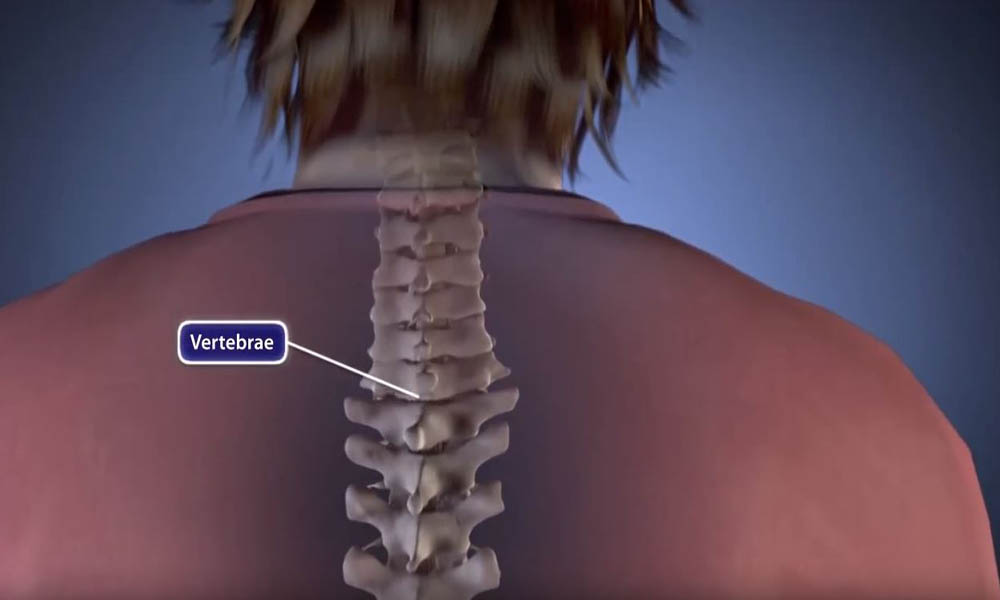
Spinal fusion is a surgical procedure used to correct problems with the small bones in the spine (vertebrae). It is essentially a welding process. The basic idea is to fuse together the painful or unstable vertebrae so that they heal into a single, solid bone.
Spinal fusion is a treatment option when motion is the source of pain — the theory being that if the painful vertebrae do not move, they should not hurt — or when there is excessive motion in the spine due to arthritis, or from trauma or a fracture.
This article focuses on anterior lumbar interbody fusion and discusses only the surgical component of the procedure. For a complete overview of spinal fusion, including approaches, bone grafting, complications, and rehabilitation, please refer to Spinal Fusion.
Interbody Fusion
An interbody fusion is a type of spinal fusion that involves removing the intervertebral disk.
When the disk space has been cleared out, your surgeon will implant a metal, plastic, or bone spacer between the two adjoining vertebrae. This spacer, or cage:
- Promotes bone healing
- Helps make the fusion happen
- Increases the collapsed intervertebral disk space
After the cage is placed in the disk space, the surgeon may add stability to your spine by using metal screws, plates, and rods to hold the cage in place.
Anterior Lumbar Interbody Fusion
An interbody fusion can be performed using different approaches. For example, the surgeon can access the spine through incisions in the lower back or through incisions in the front of the body.
In an anterior lumbar interbody fusion (ALIF), the surgeon approaches the lower back from the front through an incision in the abdomen.
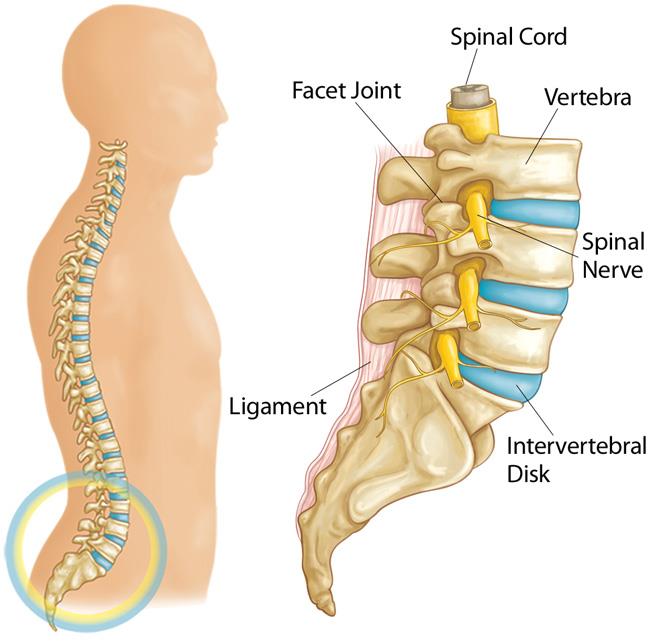
Approach
Although most spinal surgeries are performed using a posterior (back) approach, your surgeon may choose an anterior approach for a number of reasons, including:
- To avoid multiple surgeries in one area if you have already had previous spinal surgeries using a posterior (back) approach
- To allow more direct access to the intervertebral disk
- To have the ability to add more lordosis (swayback) to your spine
- To potentially help you recover faster
In contrast to a posterior approach to low back surgery, an anterior approach enables the surgeon to access your spine without moving the nerves. However, the surgeon must move organs and blood vessels to the side when using an anterior approach. In most cases, a vascular surgeon assists the orthopaedic surgeon with opening and exposing the disk space. An anterior fusion may also be performed with a less invasive technique, resulting in reduced muscle injury.
Surgical Technique
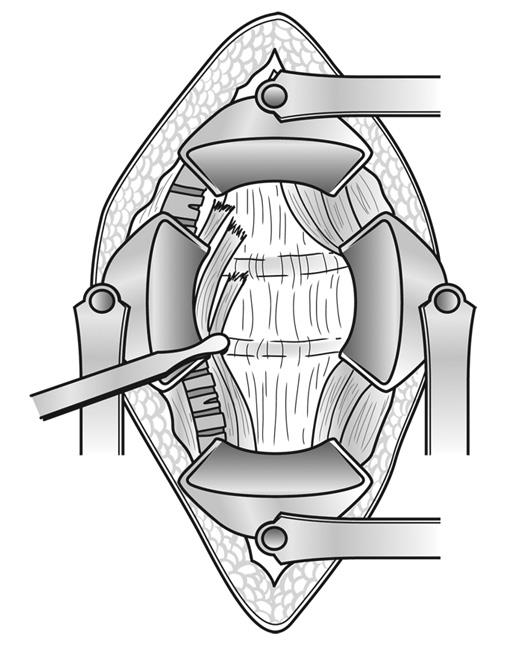
- In the first part of the procedure, your surgeon — with the help of a vascular surgeon — will typically expose the part of the spine that needs work.
- They will then remove the intervertebral disk from the disk space.
- When the disk space has been cleared out, the surgeon will implant a metal, plastic, or bone spacer between the two adjoining vertebrae. This spacer, or cage, usually contains bone graft material. This promotes bone healing and helps make the fusion happen.
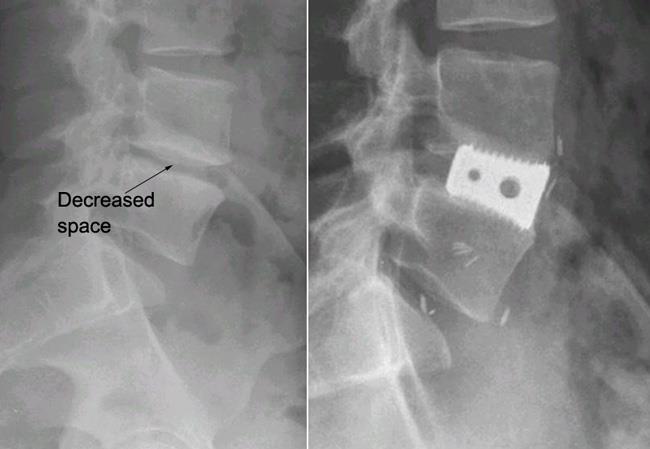
- After the cage is placed in the disk space, your surgeon may add stability to your spine by using a plate or screws to hold the cage in place. In some cases, this may be done through the same incision. In other cases, however, your surgeon may need to insert additional screws into the back of your spine through a separate incision in your back (posterior approach). Before your procedure, your surgeon will talk with you about which option will work best in your case.
Your incision may be horizontal or vertical, and either in the middle or off to the side depending on how comfortable your surgeon is in accessing the spine. This is a matter of preference and may depend on whether you have had abdominal surgery before.
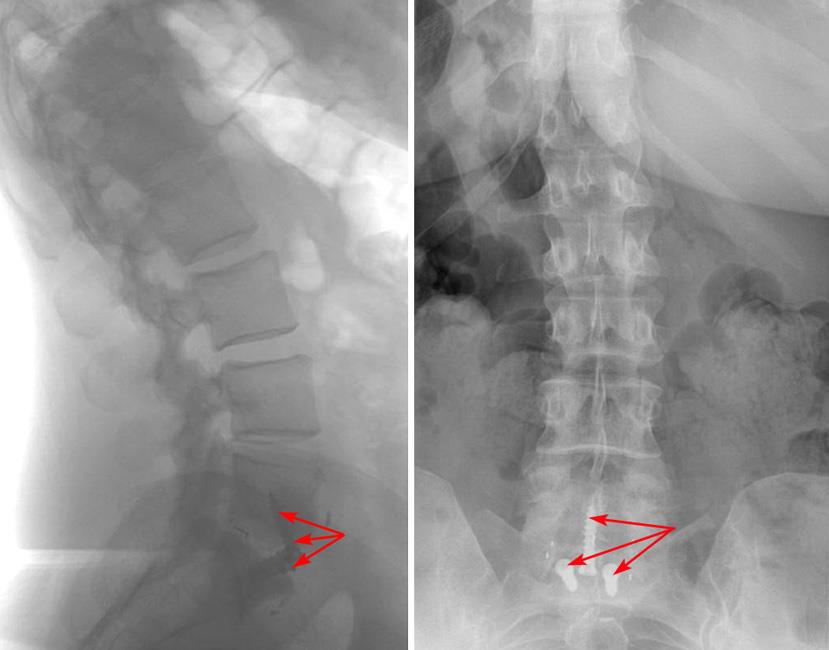
Typically, the complication rate for the anterior procedure is lower than for traditional spinal surgery. Possible disadvantages include:
- Nerve damage, which can result in weakness in tapping your foot
- Rare incidence of bowel, bladder, or blood vessel injury (<0.1%)
- Incisional hernia (where the muscle seems to pouch out)
Talk to your surgeon about the approach that will best meet your health needs.
Recovery
In most cases, you will stay in the hospital 1 to 3 days after an ALIF. The length of your stay will depend upon how well-controlled your pain is and your ability to stand and move around.
Most patients are encouraged to stand and walk by the first day after surgery. Your surgeon may provide you with a back brace to help make you more comfortable and to protect the surgical fusion.
You will perform basic exercises, including routine walking, during the first several weeks after surgery. During this time, it is important to avoid bending with your back, twisting, or lifting anything heavier than a gallon of milk.
Most patients who undergo ALIF can expect improvement of lower back pain and disability in weeks to months after surgery.
Future Directions
With the advent of newer technologies and better instrumentation, your surgeon may be able to perform this surgery through a smaller incision in the front of your spine. This approach can decrease pain and help you feel better sooner. However, the biological fusing of the spine takes the same amount of time whether you have traditional or minimally invasive surgery.
In addition, expandable cage technology enables surgeons to insert smaller devices which are then expanded to fit your anatomy. Because this approach uses a smaller incision, there may be less chance of muscle and nerve damage.
Last Reviewed
February 2023
Contributed and/or Updated by
AAOS does not endorse any treatments, procedures, products, or physicians referenced herein. This information is provided as an educational service and is not intended to serve as medical advice. Anyone seeking specific orthopaedic advice or assistance should consult his or her orthopaedic surgeon, or locate one in your area through the AAOS Find an Orthopaedist program on this website.