






Staying Healthy
Playground Safety Guide
Playgrounds are exciting places for children to be outdoors and active, and to make friends. Despite these great benefits, playgrounds are also common places where kids get hurt. Each year, more than 220,000 children under the age of 14 are treated in hospital emergency rooms across the United States for injuries occurring on playgrounds.
There are several things parents and caregivers can do to help make the playground safer for children. This includes:
- Providing strong supervision
- Ensuring that equipment and ground surfaces are free of potential hazards
- Steering kids to age-appropriate play areas.
Here are a few other tips on how to prevent playground injuries from occurring and to lessen the severity of injuries that do occur.
Types of Playground Injuries
Although minor bumps, bruises, and cuts frequently occur on playgrounds, many playground injuries are more severe. The most common playground-related injuries that require a doctor's care are:
- Broken bones (fractures)
- Sprains and strains
- Internal organ injuries
- Dislocations
- Concussions
Although it rarely happens, deaths have also been associated with playground equipment. In a recent 10-year timespan, 147 children (14 years or younger) died from playground-related injuries: 82 strangulations and 31 falls.
While most playground injuries occur on public playground swings and climbing equipment, 70% of deaths occurred on home playgrounds.
Common Causes of Playground Injuries
Falls
The most common playground-related cause of childhood emergency room visits is falling from the equipment to the ground. Children fall because they slip, lose their grip, or lose their balance while playing on monkey bars, swings, slides, merry-go-rounds, and see-saws.
Even something as simple as the drawstrings from a hooded sweatshirt can catch on a piece of playground equipment and lead to a fall. Often, children are hurt not only by the fall, but by being struck by the equipment as they fall.
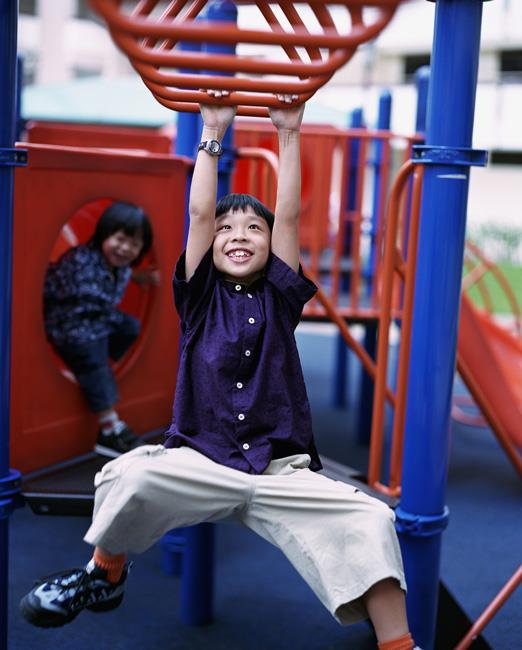
In a natural effort to protect themselves, children will often fall on an outstretched hand and break the bones involving the elbow. This type of elbow fracture (supracondylar fracture of the humerus) is the most common injury that requires surgical treatment.
Slides
Many injuries also happen on slides. One study found a relationship between shinbone (tibia) fractures and young children going down a slide on the lap of an adult. In many of these cases, the child's leg became stuck, but the adult and child could not stop moving down the slide. In other cases, the child's leg became twisted during the ride down.
Other Causes
- A smaller number of playground injuries occur on see-saws (also called teeter-totters).
- To lesser degrees, injuries result from contact with sharp edges of equipment, impact with stationary equipment, and falling after being struck with some type of equipment other than what the child was playing on — for example, walking past a moving swing.
- Playgrounds with poor maintenance present extra opportunities for injuries from trash, rusty play equipment or damaged fall surfaces.
Injury Prevention
Supervision
Close supervision by a responsible adult may be the most important factor in preventing or minimizing playground injuries. Age-appropriate equipment and carefully designed playground layouts, by themselves, won't be enough to prevent all injuries that may occur. Adults must provide focused supervision. They must instruct children in the proper use of the equipment, and monitor and enforce playground rules.
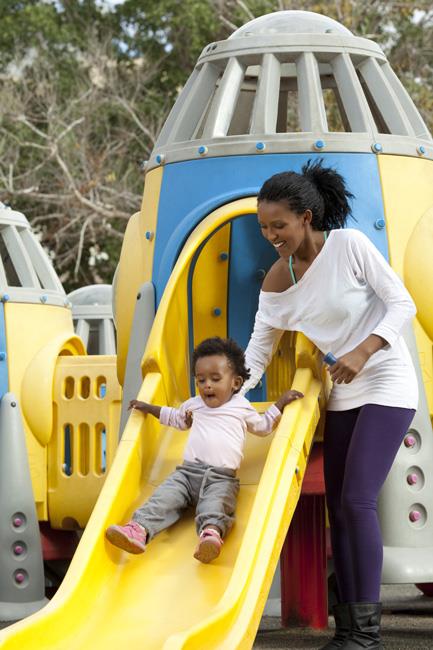
Parents, relatives, teachers, babysitters, or anyone who sends or brings children to the playground should periodically inspect the facility for hazards. Report any problems to the proper officials. Don't let your children use that playground until the authorities have completed repairs.
Playground Design
Whether playground injuries are caused by falls or other types of contact, attention to three major factors can help to reduce the incidence of injury. These factors are:
- Playground surface
- Playground plan
- Equipment installation and maintenance
Playground surface. The type of surface on the playground is the most important factor in the number and severity of injuries due to falls.
- The number and severity of injuries can be reduced by using softer surfaces, such as wood mulch or chips, shredded tires, or sand.
- Hard surfaces, such as asphalt and concrete, result in the most severe injuries and are unsuitable under any playground equipment.
- Soil, packed dirt, grass, and turf are not recommended for surfacing either, because their ability to absorb shock can be affected greatly by weather conditions and wear.
Playground plan. A well-planned playground should offer activities to encourage the development of perception and physical skills, including running, walking, climbing, dodging, swinging, sliding, throwing, catching, pulling, and pushing.
General guidelines for a well-planned playground include:
- Separate areas should be available for active play, such as swinging, and for quiet play, such as digging in sandboxes.
- Spaces for preschoolers should be located away from areas where older, more active children play.
- A "use zone" should be established around equipment, with adequate space for entering and exiting. Open fields should be positioned to enable children to run freely without colliding with other children or equipment.
- Zones for popular activities should be separate to avoid overcrowding.
- Pathways that link activity areas should provide for easy travel between areas, and unobstructed vision for a child's height.
- Sight lines in all playground areas should be clear to allow proper adult supervision.
Equipment installation and maintenance. Schools and cities should keep playgrounds in good condition by inspecting and maintaining the equipment throughout the year.
Heavy rainfall, snow, temperature extremes and high winds can damage playground equipment, as can heavy use. The most popular equipment might wear out quickly.
Manufacturers' instructions for proper installation and spacing should be followed carefully, including recommendations for maintenance. Equipment should be inspected regularly to identify any loosening, rust or corrosion, or deterioration from use, rot, insects, or weathering.
Guidelines for Safe Playground Use
- Be sure you can clearly see your children on the playground. The kids should have clear, unobstructed views from their height.
- Avoid playgrounds that have concrete, asphalt, hard-packed soil, or grass. The surface should be made of wood chips, mulch, or shredded rubber for play equipment up to 7 feet high.
- Make sure children are wearing appropriate shoes for safe running, climbing, and jumping. Check that the child's shoelaces are tied or velcro straps are secured.
- Steer children to age-appropriate playground equipment.
- Check to see that there is enough space for kids to easily get off the slide or merry-go-round. Don't let kids crowd around the exit areas.
- Try the handgrips to verify they are shaped and sized for easy grasp.
- Swing seats should be made of plastic or rubber. Avoid metal or wood.
- Avoid any equipment that has openings that could entrap a child's head.
- Remove tripping hazards such as exposed concrete footings, tree stumps, or rocks.
Playground Safety Tips for Kids
Parents and guardians, print and share this infographic with your kids to help them understand playground safety basics:

Last Reviewed
April 2022
AAOS does not endorse any treatments, procedures, products, or physicians referenced herein. This information is provided as an educational service and is not intended to serve as medical advice. Anyone seeking specific orthopaedic advice or assistance should consult his or her orthopaedic surgeon, or locate one in your area through the AAOS Find an Orthopaedist program on this website.