






Staying Healthy
Ladder Safety Guide
Ladders are useful tools. Nearly everyone uses them to reach out-of-the-way objects on pantry shelves or closets, wash windows, clean gutters, or hang holiday lights. Ladders also are potentially dangerous. In 2018, more than 580,000 ladder-related injuries required medical treatment according to the U.S. Consumer Product Safety Commission. The most common injuries are cuts, bruises and fractured bones. However, some injuries are more severe.
Fortunately, many of these injuries can be avoided by following the ladder safety guidelines shown below.

Choose the Correct Ladder
- Use a ladder of proper length to reach the working height that you need. Inside a home, that probably means a low stepladder. For outside chores, you may need a taller stepladder and, for some projects, an even taller single or extension ladder. Keep in mind that, on a stepladder, the highest standing level should be two steps down from the top. On a single or extension ladder, never stand above the third rung from the top.
- Use a ladder according to use and "working load" — the amount of weight the ladder can hold, including yourself and any tools or decorations.
Inspect the Ladder Before Using It
- Never use a ladder that is damaged, broken or bent.
- Check the ladder for any loose screws, hinges or rungs.
- Clean off any mud, grease, oil, snow or other slippery liquids that might have accumulated on the ladder.
- Do not make a temporary repair of broken or missing parts because these repairs could fail while you are high off the ground.
Proper Set Up of the Ladder
- Be sure the ladder is set up on stable, even ground. Outside ground can become bumpy after cycles of freezing and thawing over the winter months or may be soft or muddy throughout the year.
- If working outside, make sure the ladder is away from electrical wires, tree limbs, or any other obstructions.
- Use the 4-to-1 rule: Make sure the ladder is 1 foot away from the wall for every 4 feet that the ladder rises. For example, if the ladder touches the wall 16 feet above the ground, the feet/base of the ladder should be 4 feet from the wall. If you are going to climb onto a roof, the ladder should extend 3 feet higher than the roof. The upper and lower sections of an extension ladder should overlap to provide stability.
- Whether inside or outside the home, do not place stepladders or utility ladders on boxes, countertops or unstable surfaces to gain additional height.
- Before using a stepladder, make sure it is fully open and that the spreaders or braces between the two sections are fully extended and locked.
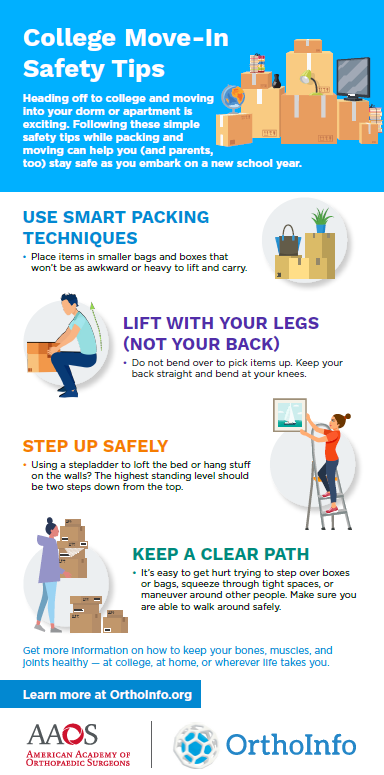
- The highest standing level on a stepladder should be two steps down from the top.
- Ladder height versus work height:
Tips For Safe Ladder Use
- Take time to secure the ladder properly.
- Make sure the soles of your shoes are clean so they do not slip off the ladder rungs. Do not wear leather-soled shoes because they can be slippery.
- Always wear lace-up shoes or boots, rather than sandals or flip-flops. Make sure your shoelaces are securely tied and that your pant legs do not extend under your shoes.
- Face the ladder while climbing, and stay in the center of the rails. Grip both rails securely while climbing.
- It is always better to move the ladder than to overreach.
- Leaning too far to one side, and reaching too far overhead, can make you lose your balance and fall. Your bellybutton should not go beyond the sides of the ladder.
- Never climb a ladder without someone nearby to spot you.
- On a single or extension ladder, never stand above the third rung from the top and never climb above the point where the ladder touches the wall or vertical support.
- On stepladders, never stand on the pail shelf, spreaders or back section.
- Do not stand above the marked level; never stand on the top rung of any ladder.
- Do not overload the ladder. It is meant to be used by one person at a time.
- Do not use a ladder if you tire easily, are subject to fainting spells, or are taking medications or consuming alcohol that may make you dizzy or drowsy.
- Do not use the ladder or the pail shelf as a seat.
- Never use a ladder in high winds.
Falls
If you fall from a ladder:
- Calmly assess the situation and determine if you are hurt.
- Get up slowly.
- If you feel that an injury has occurred that prevents you from standing or walking, do not panic. Call for assistance. If the injury is serious, call 911.
- If you are not injured, rest awhile and regain your composure before climbing again.
Ladders are useful tools that regularly help with a variety of chores and projects. Ensuring that your ladder is safe, and that you are properly climbing and moving on the ladder, can help prevent injuries.
Last Reviewed
August 2019
AAOS does not endorse any treatments, procedures, products, or physicians referenced herein. This information is provided as an educational service and is not intended to serve as medical advice. Anyone seeking specific orthopaedic advice or assistance should consult his or her orthopaedic surgeon, or locate one in your area through the AAOS Find an Orthopaedist program on this website.