






Staying Healthy
Seniors and Exercise: Starting An Exercise Program
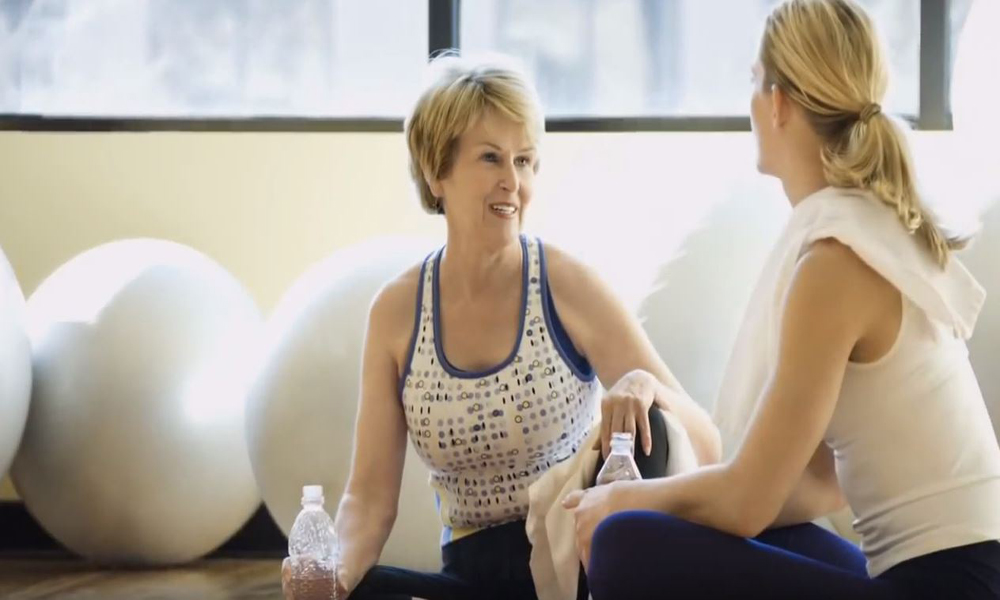
Many seniors wish to optimize their health by cultivating an active lifestyle that includes regular exercise.
Before starting any exercise program, however, you should meet with your medical doctor for a complete physical exam. Ask your doctor if you have any medical problems that may affect your fitness program. If you do, work with your doctor to develop a safe exercise program.
It is important to start exercising slowly to allow your body to adjust. It might have taken you a long time to get out of shape and it will take some time to get back into shape. Trying to do too much, too quickly, can lead to injuries.
Aerobics
There are lots of ways to exercise aerobically. If you are just getting back into exercise, a good place to start is with a walking program.
Many wearable devices, watches, and even your phone can track how many steps you take each day. You can also purchase a pedometer, but these have largely been replaced by wearables. Start by seeing how many steps you take in a regular day. Gradually add more steps to your daily activity. Easy ways to increase your steps include:
- Parking farther away from building doors
- Taking the stairs instead of elevators
- Walking up escalators
Once you have begun increasing your steps, gradually work toward a goal of 10,000 to 15,000 steps per day. To do this, you will need to plan time to walk for exercise.
- Walking a half mile every other day is a good start.
- As this becomes easier, try walking every day.
- When you are ready to increase your distance, be sure not to increase it more than a half mile at a time. This will help prevent overuse syndromes or other injuries.
- If 10,000 steps a day is too much for you, even 7,000 steps a day has been shown to be beneficial to overall health.
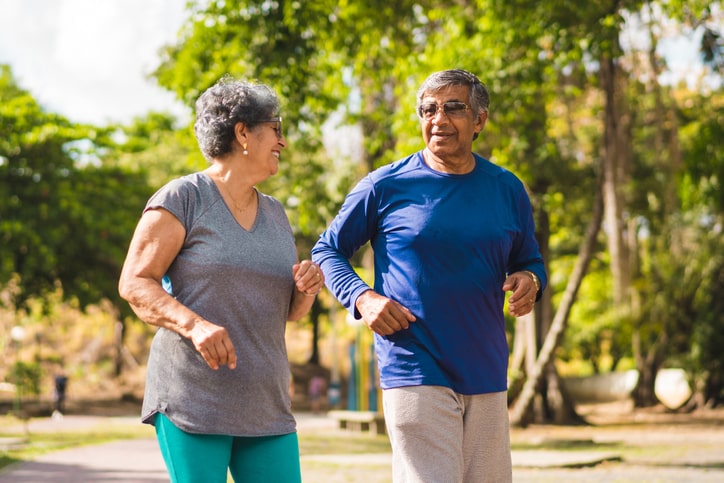
Wear good shoes for your walks. Make sure they fit comfortably and have a good cushion. It is also important that the shoe's toe box is wide enough for your foot. If you wear an orthotic (arch support), make sure it fits properly and always have it available when trying new shoes.
Replace your shoes every 6 to 9 months, or about every 350 to 500 miles. Walking in worn-out shoes may lead to unnecessary pain and injury. Learn more: Athletic Shoes
As you progress with your walking program, add variety so it does not become boring.
- Change where or what time you walk.
- Find a partner to walk with.
- Consider adding some hills or gradual elevation.
Alternate walking one day with a different aerobic activity — such as bicycling — the next. This is called "cross training."
Fitness classes are a great way to add variety to your fitness program. Try yoga, tai chi, low-impact aerobics, or dancing.
Most health clubs, Park Districts, and community centers have a pool available for swimming and water exercise, including water aerobics. Water exercise is another great way to start an exercise program, especially if you are overweight and/or have joint pain. The water supports some of your weight and allows you to exercise with less weight and stress on your joints.
As you branch out into these other activities, wearable devices like smart watches can help you keep track of your progress and health statistics, including heart rate, exercise intensity, calories burned, and steps taken.
Flexibility and Agility
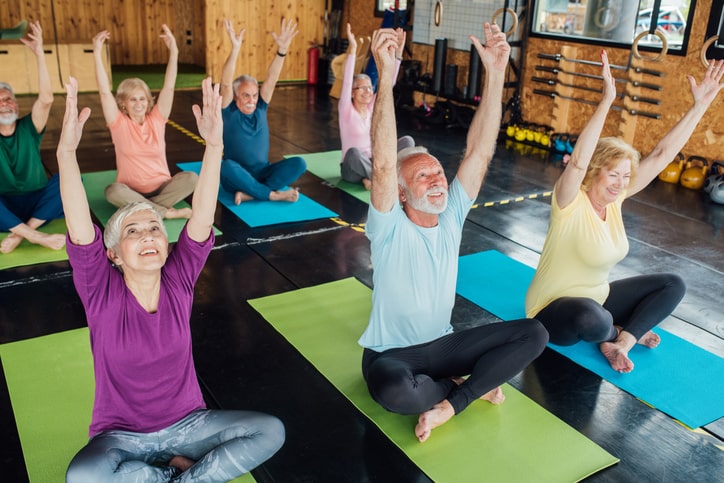
All aerobic activities should be followed by stretching. This will help you gain flexibility and reduce muscle soreness. Being more flexible also reduces your risk of injury. Yoga and tai chi also incorporate stretching and can help improve flexibility.
Stretching before aerobic activity is also important. Always warm up your muscles before stretching. Five to 10 minutes of lower-intensity activity — walking, for example — is a good start. Additional guidelines for stretching include:
- Stretch gently. Relax and breathe during your stretch.
- Hold each stretch for about 15 to 30 seconds.
- Do not bounce.
- Do not push a stretch too far; stretching should not be painful.
If you have a back or joint condition, talk with your orthopaedic surgeon or physical therapist about a safe, effective stretching program.
Strength
Before incorporating strength training into your fitness program, talk to your orthopaedic surgeon, physical therapist, primary care doctor, or fitness professional about effective exercises and proper technique.
You can choose from a wide range of equipment to strength train, such as free weights, resistance bands, weight machines, and even water-filled jugs. For beginners, strength training can even be body weight-based in the form of lunges, step-ups a,nd push-ups (with or without modifications to accommodate physical limitations).
Safe, effective workout programs can be found through organizations such as the AARP, YMCA, YWCA, or your local health and fitness club or community center.
Joining a local health club can be very beneficial when you are ready to spend more time on strength training. Many health clubs offer both free weights and exercise machines to help vary your workouts and keep them interesting. Fitness professionals are onsite to provide guidance and offer classes to teach safe weight training exercises.
In addition, many online exercise apps and programs are available if you prefer to work out at home.
Core strengthening — working the muscles of your stomach and back — is important before progressing to other strength activities. It is important to go slow, since it may have been some time since you have used these muscles. Pilates is an exercise program that focuses on core strengthening. Many Pilates exercises can easily be incorporated into your resistance program.
More tips for effective strength training include:
- Frequency. Work each muscle group (arms, legs, stomach, back, and hips) twice a week. Do not train the same muscle group 2 days in a row. Always give your muscles a rest from strength training for at least 1 day.
- Speed. Strength exercises are most effective when performed slowly. Move through the motion smoothly — do not jerk or swing the weights.
- Quantity. Do 8 to 12 repetitions of each exercise, working your muscles to fatigue. If you can do 12 repetitions without tiring, increase your weight slightly. You can also work up to training with heavier weights and fewer (4 to 6) repetitions. However, this usually requires you to first build up your strength with lower weights and higher repetitions, and heavier weights may not be tolerated by people with chronic joint and tendon injuries.
Relaxation
Relaxation helps to lower blood pressure, relieve stress, and improve the immune system.
You can add relaxation to the end of your exercise program or do it at a separate time. Relaxation can be simple. Just sit with your eyes closed and concentrate on controlled deep breathing. Yoga or therapeutic massage are other relaxation techniques to try.
Hydration and Nutrition
As we get older, we tend to drink less water. Our bodies need eight 8-ounce glasses of water each day. Caffeinated beverages, such as coffee and tea, do not count toward hydration. They act as a diuretic and remove water from the body.

General guidelines for healthy eating include:
- Eat your heavier meals earlier in the day. Try having a good breakfast and lunch with a light evening meal. Aim for 30 grams of protein in each meal. Do not eat within 2 hours of bedtime unless otherwise recommended by your doctor.
- If you are trying to build muscle, aim to consume 1.6 grams of lean protein per kg of your body weight.
- Consider taking a walk 1 hour after you eat. This can minimize glucose spikes.
- Increase the fiber in your diet with a goal of 30 grams per day. Eat more whole grains, fruits, and vegetables.
- Minimize processed foods that are high in sodium and sugar.
Contributed and/or Updated by
Peer-Reviewed by
AAOS does not endorse any treatments, procedures, products, or physicians referenced herein. This information is provided as an educational service and is not intended to serve as medical advice. Anyone seeking specific orthopaedic advice or assistance should consult his or her orthopaedic surgeon, or locate one in your area through the AAOS Find an Orthopaedist program on this website.