






Diseases & Conditions
Triceps Tendon Tear at the Elbow
This article was written and/or reviewed by a member of American Shoulder and Elbow Surgeons (ASES).
The triceps tendon attaches the triceps muscle in the back of the arm to a bone in the forearm (olecranon) to allow you to straighten your elbow. If you tear the triceps tendon at the elbow, you may lose some strength in your arm and/or have pain when you forcefully try to extend your elbow or push with your arm.
Acute tears can occur with elbow trauma at any age, or from injuries in athletes (e.g., weightlifters). Triceps tears causing pain or weakness can be treated surgically with good results.
Anatomy
The elbow is a hinge joint made up of three bones:
- The humerus (the upper arm bone)
- The ulna and radius (the two bones in the forearm)
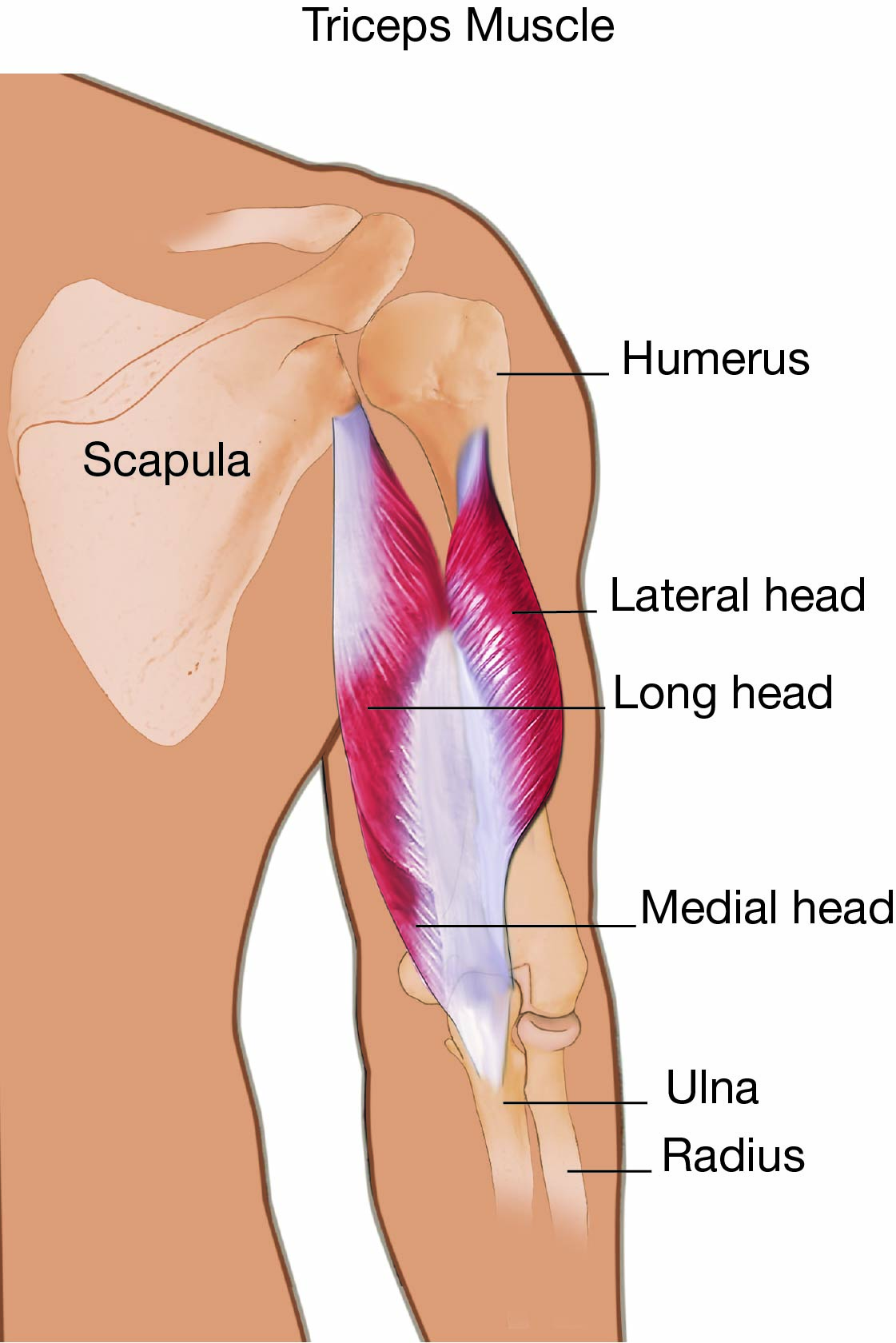
The triceps muscle has three distinct parts, called heads, in the upper arm:
- The lateral and medial heads attach to the back of the humerus.
- The long head attaches to the bottom of the shoulder socket on the scapula.
These three parts combine down by the elbow into a single tendon that attaches to the back of the ulna just past the elbow joint on an area called the olecranon.
Description
Triceps tendon tears can be either partial or complete.
- In partial tears, only a portion of the tendon is injured and some of the tendon remains attached to the olecranon.
- In complete tears, the tendon completely detaches from the olecranon.
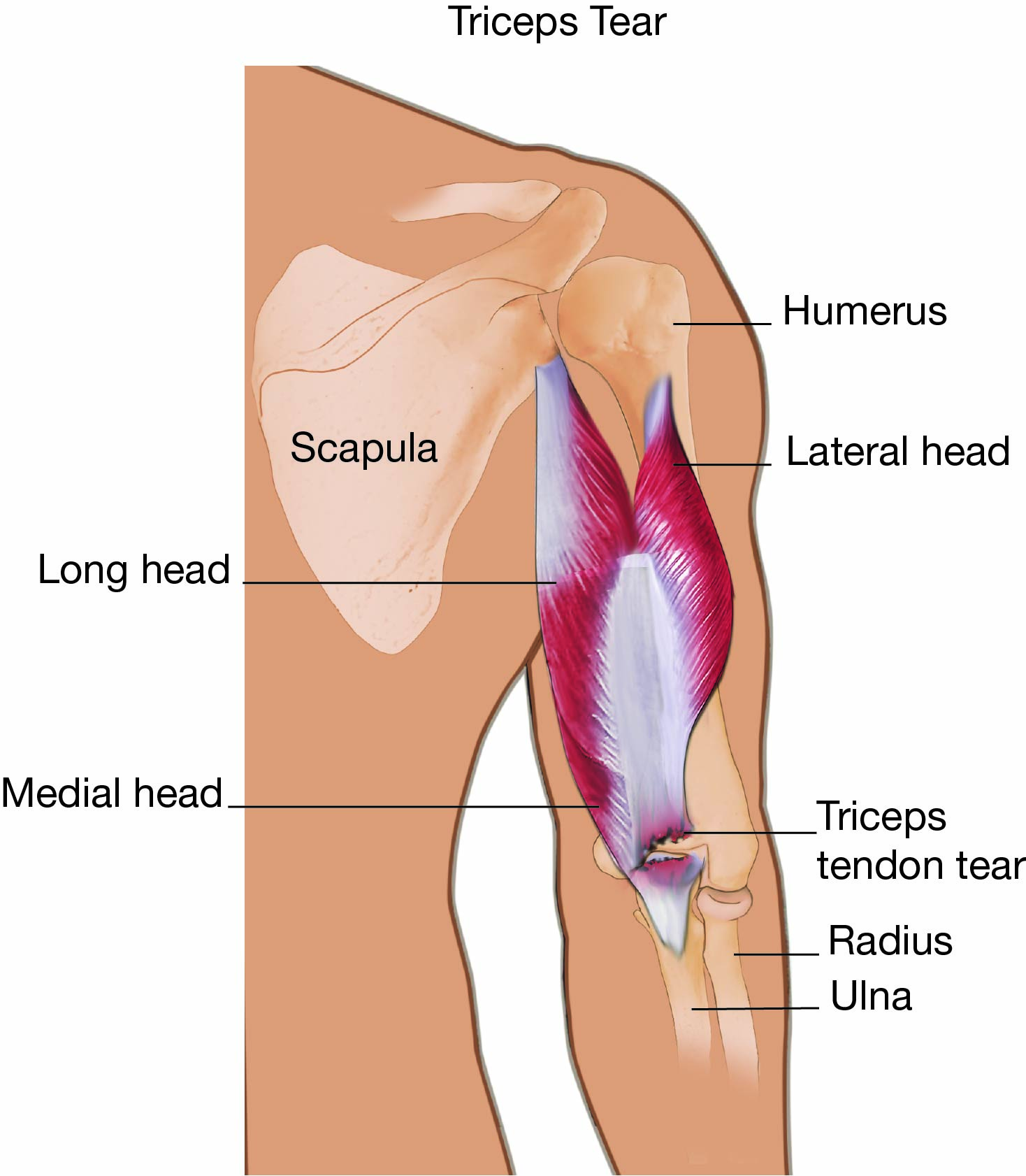
Due to the triceps tendon's broad and strong insertion (attachment to bone), it tears less often than other tendons in the body.
Cause
- Most triceps tendon injures are due to a sudden injury from pushing a heavy load. This may occur when lifting weights or from a fall onto an outstretched hand.
- Less commonly, the triceps can be cut due to a deep laceration.
The initial diagnosis of a triceps tendon tear may be difficult, as the symptoms can be vague and weakness is not always obvious.
Risk Factors
Your risk of a tendon tear increases with:
- Heavy lifting activities. Pushing too much weight during weightlifting or sport activities can result in an injury.
- Corticosteroid medications. Using corticosteroids can lead to increased muscle and tendon weakness.
- Anabolic steroids. Using anabolic steroids can weaken tendon attachments.
- Certain medical conditions. Some medical conditions, such as diabetes and kidney disease, can weaken tendon attachments.
Symptoms
- A sudden, sharp pain and swelling over the back of the elbow.
- Bruising of the back of the elbow and forearm.
- Pain or tenderness at the back of the elbow.
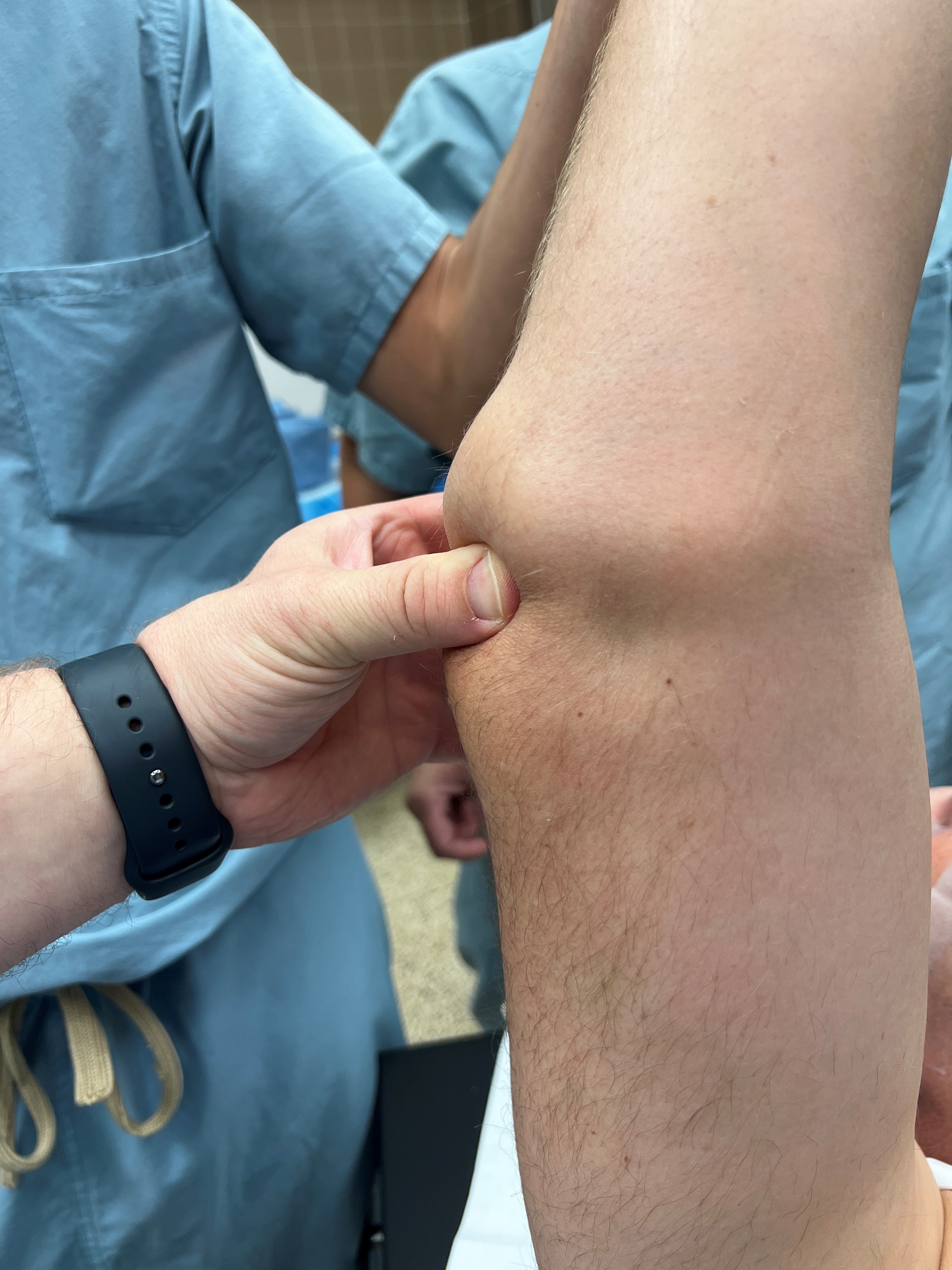
- A gap that you can feel in the back of the elbow
- Weakness when extending the elbow, especially overhead
Doctor Examination
Medical History and Physical Examination
Your doctor will typically ask you how the injury occurred and how it has affected your elbow function.
They will then perform a physical examination to test for a triceps tendon rupture and any possible associated injuries. The exam may include:
- Feeling for an obvious gap where the triceps tendon should be
- Testing your strength by having you push against resistance (such as against the doctor's hand) and/or against gravity (typically by having you try to straighten your elbow overhead)
- Testing the functioning of the nerves in your wrist and hand
Imaging Tests
Your doctor will also likely order imaging tests to help make the diagnosis and determine the severity of the tear.
- X-Rays. X-Rays show dense structures like bone. Occasionally, a small fleck of bone will pull off the olecranon with the triceps tendon, and can be seen on X-rays.
- Ultrasound and/or magnetic resonance imaging (MRI). These tests are often ordered to confirm the diagnosis and the extent of the tear.
Treatment
The treatment of triceps tendon ruptures depends on the severity of the tear and the amount of strength a patient still has with straightening the elbow.
Nonsurgical Treatment
Nonsurgical treatment is often considered for patients who have:
- Partial tears that involve less than half of the tendon width
- Adequate strength for their needs despite a more severe partial tear or full thickness tear
- Health issues that would prevent them from being able to safely undergo surgery
Treatment typically consists of:
- Several weeks wearing a splint
- After the splint is removed, either a home exercise program or formal physical therapy aimed at gradually regaining motion in the elbow and improving elbow extension strength while avoiding further injury to the tendon
Patients usually achieve full range of motion in about 3 months, but it can take several months longer to fully recover your strength.
Results are often satisfactory when less than half of the tendon is torn. With more severe tears, most patients experience some long-term strength loss.
Surgical Treatment
Surgery is typically recommended for:
- Patients with significant weakness or pain that does not respond to nonsurgical treatment and keeps them from working, exercising, or performing routine daily activities
- Active patients with complete tears
Repair involves reattaching the triceps tendon with high-strength suture material to the olecranon through either drill holes, suture anchors, or a combination of both.
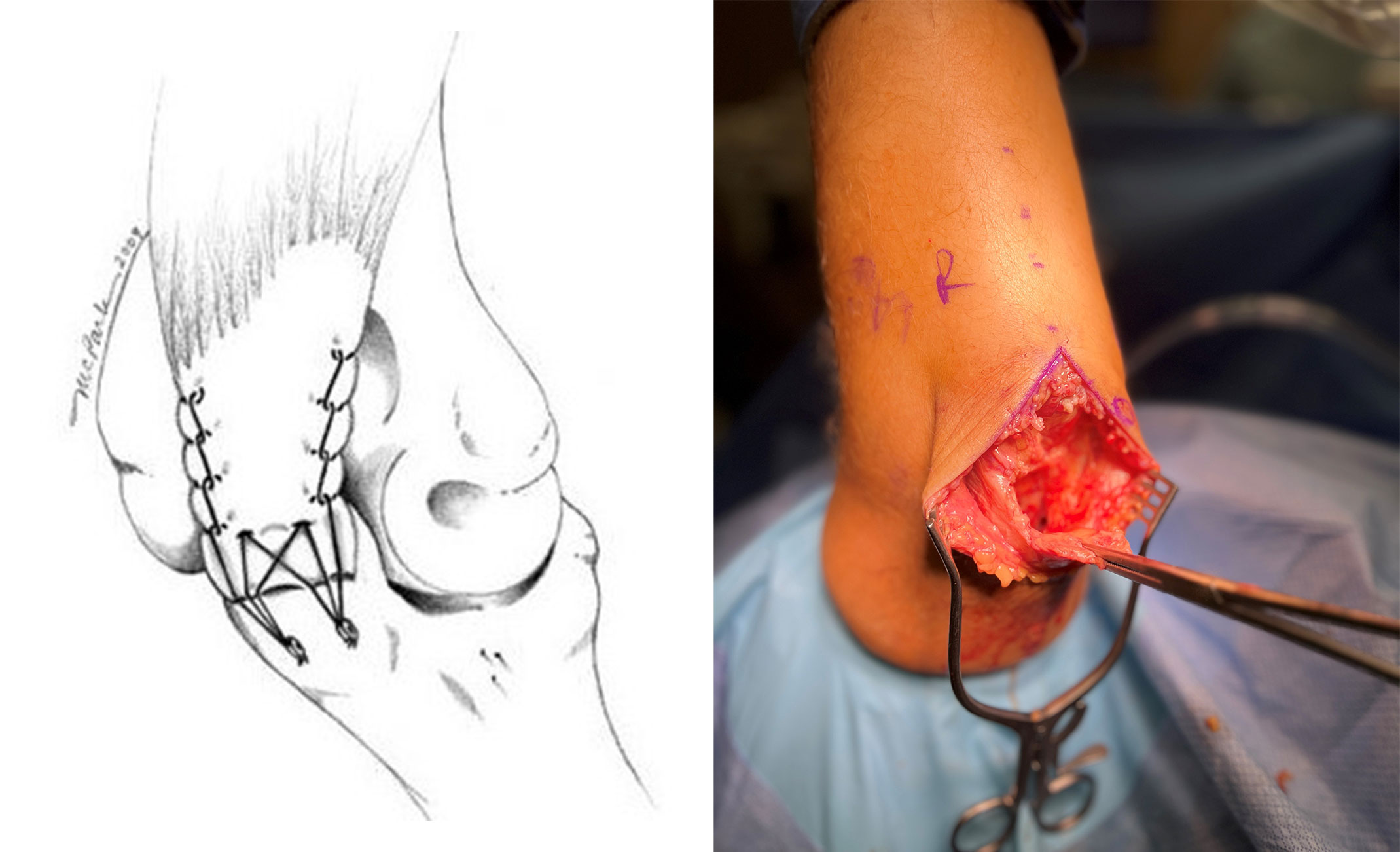
Triceps repair is typically an outpatient surgery, done at either a hospital or an outpatient surgery center.
Surgical Recovery
Your surgeon will give you specific instructions to follow after surgery depending on the severity of your tear, tissue quality, and the strength of the repair.
Post-surgery care typically includes the following:
- A short period of immobilization immediately after surgery (often for 2 weeks), either with a splint or other brace, to protect the repair and allow the surgical incision to heal.
- A home exercise program or formal physical therapy after the splint or brace is removed, focused on gradually regaining motion and strength in the elbow.
- Your surgeon may recommend a brace that limits how far you can bend your elbow for several weeks, typically letting you bend a little farther each week until you regain full elbow motion over the course of several weeks.
- Your surgeon will likely limit the amount of weight you are allowed to lift, typically during the first 12 weeks after surgery, to protect the repair while the tendon is healing.
Complications from surgery are relatively rare but can include wound healing problems, swelling over the tip of the elbow, and a slight loss of extension of the elbow. Re-rupture of the tendon can also occur in around 6% of patients, so it is important to use any supportive devices (splint or brace) and follow the restrictions your surgeon recommends.
Surgical Outcomes
Results for triceps tendon repairs are typically very good. Most patients will ultimately regain most of their strength and be able to return to their normal activities.
Contributed and/or Updated by
Peer-Reviewed by
AAOS does not endorse any treatments, procedures, products, or physicians referenced herein. This information is provided as an educational service and is not intended to serve as medical advice. Anyone seeking specific orthopaedic advice or assistance should consult his or her orthopaedic surgeon, or locate one in your area through the AAOS Find an Orthopaedist program on this website.