






Diseases & Conditions
Neck Pain
The neck has a significant amount of motion and supports the weight of the head. However, because it is less protected than the rest of the spine, the neck can be vulnerable to injury and disorders that produce pain and restrict motion.
For many people, neck pain is fortunately a temporary condition that disappears with time. Others need medical diagnosis and treatment to relieve their symptoms.
Anatomy
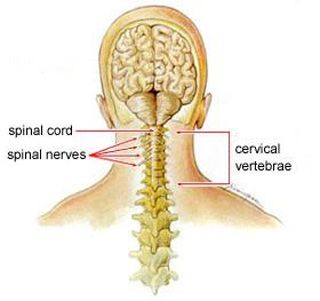
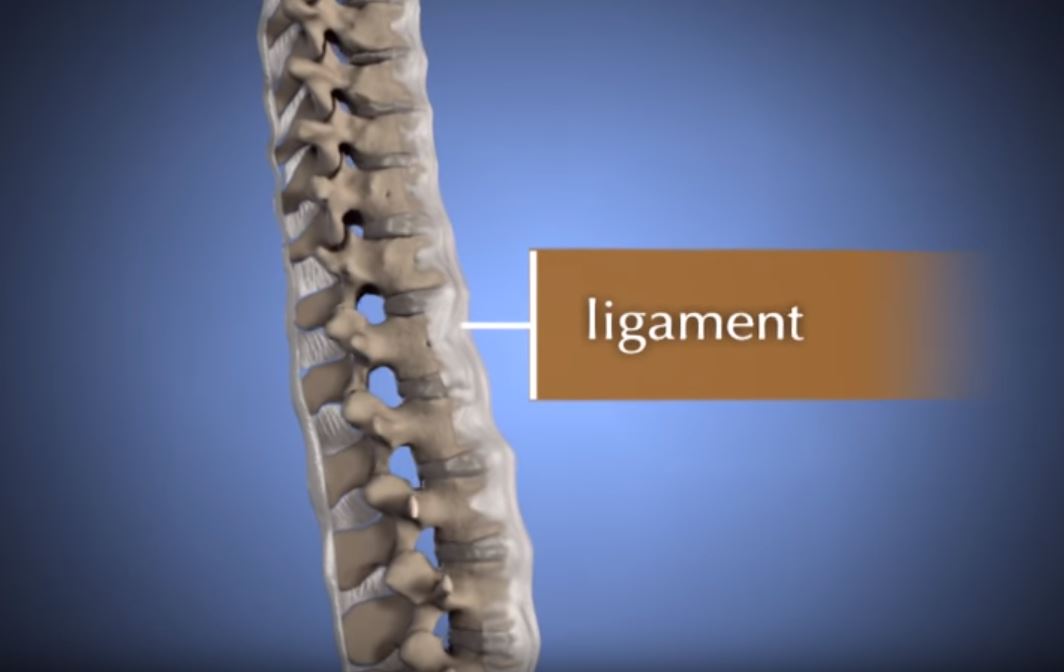
The spine is made up of 24 bones, called vertebrae, that are stacked on top of each other. The seven small vertebrae that begin at the base of the skull and form the neck make up the cervical spine. The bony vertebrae, along with the ligaments (which are similar to thick rubber bands) and muscles, provide stability to the spine. The muscles allow for support and motion.
The spinal cord runs from the base of your skill to your lower back and travels through the spinal canal (the hollow center of each stacked vertebra). Nerve roots branch out from the spinal cord through the openings in the vertebrae (the foramen) and carry messages between the brain and muscles.
Between your vertebrae are flexible intervertebral disks. They act as shock absorbers when you walk or run.
Cause
Neck pain may result from issues in the soft tissues — the muscles, ligaments, and nerves — as well as in bones and disks of the spine. The most common causes of neck pain are:
- Soft-tissue (muscle and ligament) injuries (a strain or sprain).
- Prolonged wear and tear (commonly known as cervical spondylosis, or arthritis). Wear-and-tear changes can lead to:
- Cervical spondylotic myelopathy, or spinal cord compression
- Cervical radiculopathy, a pinched nerve in the neck
In rare instances, infection or tumors may cause neck pain. In some people, neck problems may be the source of pain in the upper back, shoulders, or arms.
Cervical Disk Degeneration (Spondylosis/Arthritis)
Cervical disks act as shock absorbers between the bones in the neck.
Cervical disk degeneration usually happens in people age 40 and older. As the disks in the spine age, they lose height and begin to bulge. They also lose water content, begin to dry out, and weaken. This problem causes settling, or collapse, of the disk spaces and loss of disk space height. Eventually, the disk becomes less cushiony.
When the outer rim of the disk weakens, the disk may also bulge out and put pressure on the spinal cord or nerve roots. This is known as a herniated cervical disk. Cervical disk herniation can lead to pain, numbness, tingling, and weakness in the arms and legs.
Cervical spondylosis is extremely common. More than 85% of people over the age of 60 are affected.
Injury
Because the neck is so flexible and because it supports the head, it is extremely vulnerable to injury. Motor vehicle or diving accidents, contact sports, and falls may result in neck injury.
A rear-end automobile collision may result in hyperextension, a backward motion of the neck beyond normal limits, or hyperflexion, a forward motion of the neck beyond normal limits. This is often called "whiplash." The regular use of safety belts in motor vehicles can help to prevent or minimize neck injury.
- The most common neck injuries, sprains and strains, involve the muscles and ligaments.
- A neck injury can also cause a pinched nerve (cervical radiculopathy).
- Severe neck injuries with a fracture or dislocation of the neck may damage the spinal cord and cause paralysis.
When Should You Seek Medical Care?
If severe neck pain occurs after an injury (motor vehicle accident, diving accident, or fall), a trained professional, such as a paramedic, should immobilize the patient to avoid the risk of further injury and possible paralysis. It is essential to seek medical care immediately; time is the most critical aspect in injury prevention after trauma occurs.
You should also seek immediate medical care when an injury causes pain in the neck that radiates down the arms and legs.
If you experience radiating pain or numbness in your arms or legs causing weakness, you should be evaluated by a medical professional even if you don't have significant neck pain. Difficulty with fine motor skills, such as changes in handwriting, trouble buttoning buttons, and dropping keys and cups, may be a subtle sign of serious spine issues.
No matter the cause, you should seek medical care when neck pain is:
- Continuous (hurts all the time) and persistent (does not go away over a period of time)
- Severe
- Accompanied by pain or numbness that radiates (spreads) down the arms or legs
- Accompanied by headaches, numbness, tingling, or weakness
Contributed and/or Updated by
Peer-Reviewed by
AAOS does not endorse any treatments, procedures, products, or physicians referenced herein. This information is provided as an educational service and is not intended to serve as medical advice. Anyone seeking specific orthopaedic advice or assistance should consult his or her orthopaedic surgeon, or locate one in your area through the AAOS Find an Orthopaedist program on this website.