






Diseases & Conditions
Infection After Joint Replacement


Joint replacements are among the most successful operations ever developed. They help most patients relieve pain and return to the activities they enjoy. However, a small number of patients develop an infection after their joint replacement.
When an infection after a joint replacement occurs, your surgeon may also call it a periprosthetic joint infection, or PJI for short. An infection after joint replacement is serious, very challenging to treat, and can return despite surgery or antibiotic therapy.
Recent research is changing how surgeons think about where these infections come from, why they can be so hard to get rid of, and how to improve diagnosis moving forward. This article will help you better understand this type of infection and how doctors are working hard to prevent infections from developing.
What Is an Infection After Joint Replacement?
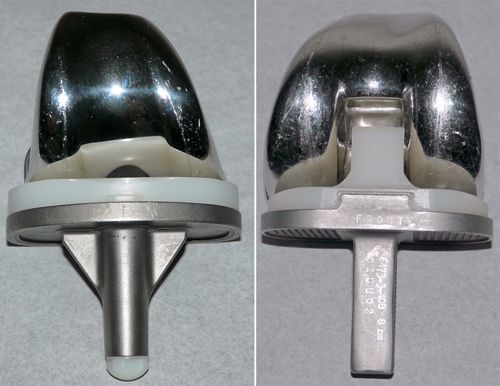
After a joint replacement, bacteria can survive and grow on implanted metal or plastic components and even on nearby tissue. This can cause an infection.
What Are the Symptoms of an Infection After Joint Replacement?
Symptoms of an infection after a joint replacement can vary widely, from mild redness and swelling all the way up to life-threatening septic shock. Sometimes, there are no symptoms at all.
Making things even more challenging, the symptoms of an infection after a joint replacement do not always show up right after surgery. They can occur a few months later or even years down the road.
The traditional symptoms of infection after a joint replacement include:
- Pain that does not change with activity
- Fatigue
- Redness and swelling at the incision site
- Wound drainage (usually more than 10 days after surgery)
- Possibly, increased pain or stiffness in a previously well-functioning joint
Although it is a common symptom of other types of infection, fever is no longer considered a sign of an infection after a joint replacement.
Where Does an Infection After Joint Replacement Come From?
Any infection in your body can spread to your joint replacement. Infections are caused by bacteria. Although there are lots of bacteria in our gut and on our skin, they are usually kept in check by our immune system. For example, if bacteria make it into our bloodstream, our immune system rapidly responds and kills the invading bacteria.
Because joint replacements are made of metal and plastic, it is difficult for the immune system to attack any bacteria that make it to these implants. Bacteria like to stick to metal. Since the metal implant does not receive any blood flow, our immune system has a hard time identifying the bacteria, so it does not know how to respond and kill it. If bacteria gain access to the implants, they may multiply and result in a joint infection.
For years, surgeons have worried about environmental germs from the operating room, instruments, or hospital causing infections after surgery. Research now suggests that in the era of modern sterilization, skin antisepsis, and pre-operative antibiotics, the patient's own bacteria are likely the key culprit in joint replacement infections.
A large study identified the skin bacteria present before surgery and compared those bacteria to the ones that that caused an infection later. Nearly 90% of the infections came from bacteria that were already living on the patient's body before surgery (also known as the skin microbiome). This raises the possibility of future personalized infection prevention for each patient's skin microbiome.
How Do You Diagnose an Infection After Joint Replacement?
Modern screening for an infection after a joint replacement relies heavily on traditional blood tests called the erythrocyte sedimentation rate and c-reactive protein, ESR and CRP for short.
These blood tests can be positive for any number of reasons, since they detect general inflammation throughout your body. So, if they are positive, your surgeon will take synovial fluid from your joint using a needle to run additional tests. These tests include alpha-defensin and CRP measured from the synovial fluid, often referred to by its commercial name: Synovasure.
How Do You Treat an Infection After Joint Replacement?
Nonsurgical Treatment
In some cases, only the skin and soft tissues around the joint are infected, and the infection has not spread deep into the artificial joint itself. This is called a "superficial infection." If the infection is caught early, your doctor may prescribe intravenous (IV) or oral antibiotics.
This treatment has a good success rate for early superficial infections.
Surgical Treatment
When a deep occurs infection after a joint replacement is diagnosed, you may need surgery to treat it.
Modular Parts Exchange - Deep infections that are caught early (within several days of their onset), and those that occur within weeks of the original surgery, may sometimes be cured with what is commonly called DAIR (debridement, antibiotics, and implant retention).
- The surgeon removes only specific parts of the implant.
- The remaining implant and surrounding tissues are thoroughly cleaned with an antiseptic wash (debridement).
- The implant liner or implant head and liner may be exchanged for new parts, depending on the joint.
- The patient receives a course of antibiotics after the procedure.
This approach is most successful when:
- The infection is identified early
- The implants are firmly attached to bone
- The patient is healthy enough to tolerate both surgery and long-term antibiotic treatment
It is often used in patients who are too medically fragile to have more extensive reconstruction, or when removing the implants would be especially difficult.
However, there are potential drawbacks to this approach:
- It has a higher risk of the infection returning over time compared to complete implant removal. Because some bacteria may remain on the implant parts that are not removed, many patients require long-term or lifelong suppressive antibiotics after surgery.
- Outcomes also depend heavily on surgical technique and the surgeon’s experience, as incomplete cleaning of infected tissue increases the likelihood of treatment failure.
For these reasons, modular parts exchange is reserved for carefully selected patients and situations where the benefits outweigh the risks.
All of the other treatments below involve complete removal of the old implants. The surgeon also thoroughly cleans (debrides) the surrounding tissues, including removing any infected tissue.
Antibiotic Eluting Spacers - Implant removal is followed by placement of an antibiotic spacer. The spacer includes a cement that releases high-dose antibiotics into the tissues around the implant while maintaining joint space and alignment.
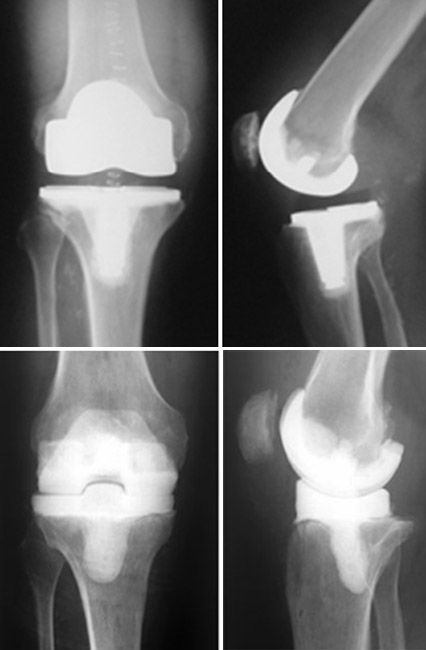
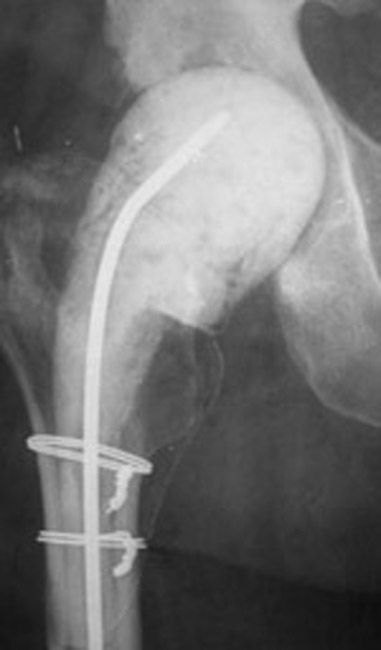
Antibiotic eluting spacers may be pre-made or custom-made during surgery. Some are designed mainly to hold space in the joint and limit motion (called static spacers), while others allow limited movement and walking (called dynamic spacers).
Static spacers may provide greater stability in severe infections or when bone and soft tissue are damaged. However, they often limit mobility and may lead to stiffness.
Dynamic spacers may allow earlier movement and improved comfort, but they are not appropriate for all patients and may be less stable in complex cases.
The choice of spacer type depends on the severity of infection, the condition of the surrounding tissues, and the patient’s overall health and activity level.
The spacer is maintained during a prolonged course of antibiotics — often 6 weeks, but it can be longer. Orthopaedic surgeons work closely with other doctors who specialize in infectious diseases. These infectious disease doctors help determine:
- Which antibiotic(s) you will be on
- Whether the antibiotics will be intravenous (delivered through a tube inserted into the arm) or oral (taken by mouth)
- The length of therapy
The infectious disease doctors will also order periodic blood work to monitor the effectiveness of the antibiotic treatment.
Once your orthopaedic surgeon and the infectious disease doctor determine that the infection has been cured (this usually takes at least 6 weeks), you will be a candidate for a new total hip or knee implant (called a revision surgery). This second procedure is stage 2 of treatment for joint replacement infection.
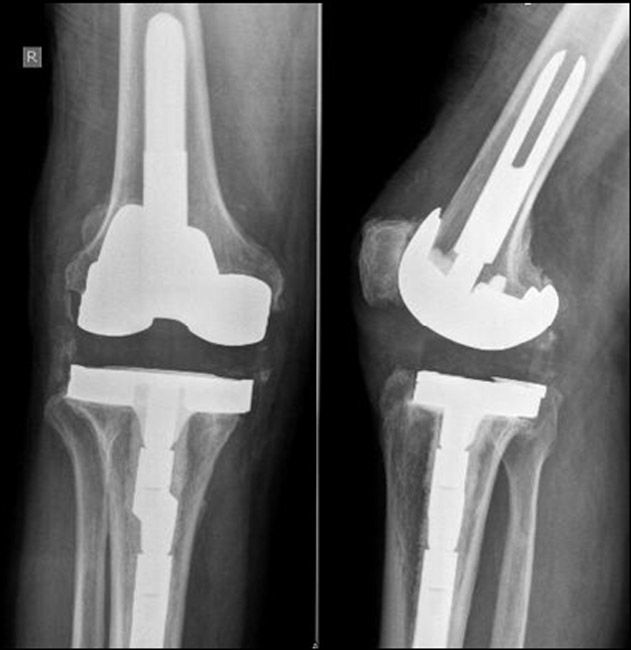
There is another type of antibiotic spacer that has gained recent popularity: the 1.5-stage spacer (also known as a durable functional spacer or destination spacer). Unlike the previously mentioned 2-stage exchange where the spacer is later replaced with new implants, a 1.5-stage spacer has the potential to remain in the body and avoid an additional operation.
Direct Re-implantation/Single-Stage Surgery - In some patients, it may be possible to remove the infected implants and place new permanent implants during the same operation. This approach is sometimes called a 1-stage exchange, or single stage re-implantation.
This approach is typically reserved for patients with:
- An identified bacteria that responds to available antibiotics
- Good soft tissue quality
- Stable overall health
During surgery, the infected implants are removed, extensive cleaning (debridement) is performed, and antiseptic washes are used to reduce bacteria. New implants are then placed immediately, often with antibiotic-containing cement. Patients may still require prolonged antibiotic treatment after surgery.
The benefit of this approach is that it causes minimal bone loss and no major damage to the surrounding muscles, tendons, or skin.
When used in carefully selected patients, direct re-implantation can provide similar outcomes to staged procedures while avoiding the need for multiple operations. However:
- It is not appropriate for all patients
- It carries a risk of persistent or recurrent infection if bacteria are not fully controlled.
- It is important to note that the reconstructive options may be limited if the infection remains after a 1-stage exchange.
Single-stage surgery is not as popular as two-stage surgery, but it is gaining wider acceptance as a method for treating infected total joints. Doctors continue to study the outcomes of single-stage surgery.
What Makes Treating an Infection After Joint Replacement So Difficult?
To understand why an infection after a joint replacement is so difficult, it is important to have an honest discussion about bacteria, antibiotics, and the limits of surgery.
You will notice that using antibiotics alone is not listed above to treat an infection after a joint replacement. Antibiotics on their own can be used for suppression (a form of remission). But once the antibiotics are stopped, the infection will come back. As a result, treatment plans for infection after joint replacement always include surgery.
Bacteria do not float freely around a joint replacement. They bind (attach) to the implant and produce a protective coating called a biofilm. Biofilm slows down antibiotics, blocks immune cells, and prevents surgical excision. Biofilm can form on an implant or within the associated host tissue such as bone or scar.
Currently, there is no method to completely remove biofilm. Even after surgical debridement and antiseptic chemicals, some biofilm remains. That is why removing infected implants and using antibiotic eluting cement spacers are a part of treatment.
In addition, bacteria under stress can stop dividing, turn off their metabolism, and essentially hide from the antiseptic, antibiotic, or immune threat. They become what are called "persister cells." Since most antibiotics work best on actively growing bacteria and not as well on persister cells, the amount of antibiotics required to remove persister cells can be toxic to brain and kidney function.
Can an Infection After Joint Replacement Return?
Clinical data show that patients who have an infection after a joint replacement are more likely to develop another infection in the future. Some patients develop a repeat infection in the same joint, while others may develop an infection in a different joint replacement (for instance, if you have had both knees replaced and develop an infection in your left knee, you might develop a future infection in your right knee).
Studies suggest that these repeat and multiple infections are not simply bad luck. The immune environment plays a critical role.
Researchers looked at the protein fingerprint of synovial fluid from joints thought to be cleared of infection by standard criteria. It turned out many of those "clear" joints still looked biologically similar to infected joints. In other words, the joint still had bacteria within it, but the bacteria were not clinically active (i.e., dormant, like other diseases such as tuberculosis or cancer). It is estimated that close to 10% of joint replacements worldwide could have a dormant infection, and some of those dormant infections may later become active.
How Do I Keep My Joint Replacement From Becoming Infected?
At the time of original joint replacement surgery, there are several measures taken by your healthcare team to minimize the risk of infection. Some of the steps have been proven to lower the risk of infection, and some are thought to help but have not been scientifically proven.
The most important known measures to lower the risk of infection after total joint replacement include:
- Antibiotics before and after surgery. Antibiotics are given within 1 hour of the start of surgery (usually once in the operating room) and continued at intervals for 24 hours following the procedure.
- Short operating time and minimal operating room traffic. Efficiency in the operation by your surgeon helps to lower the risk of infection by limiting the time the joint is exposed. Limiting the number of operating room personnel entering and leaving the room is also thought to decrease the risk of infection.
- Use of strict sterile techniques and sterilization of instruments. Care is taken to ensure the operating site is sterile, the instruments have been autoclaved (sterilized) and not exposed to any contamination, and the implants are packaged to ensure their sterility.
- Pre-operative nasal screening for bacterial colonization. There is some evidence that testing for the presence of bacteria (particularly the Staphylococcus species) in the nasal passages several weeks before surgery may help prevent joint infection. In institutions where this is performed, patients who are found to have Staphylococcus in their nasal passages are given an intranasal antibacterial ointment before surgery. The type of bacteria that is found in the nasal passages may help your doctors determine which antibiotic you are given at the time of your surgery.
There are also things you should (and should not) do at home before your procedure to reduce your risk of infection:
- DO a preoperative chlorhexidine wash. There is evidence that home washing with a chlorhexidine solution (often in the form of soaked cloths) in the days leading up to surgery may help prevent infection. This may be particularly important if patients are known to have certain types of antibiotic-resistant bacteria on their skin or in their nasal passages (see above). Your surgeon will talk with you about this option.
- DO perform skin assessments in the weeks leading up to your surgery. Tell your doctor about any skin irritations on the limb that is being operated on, including cuts, scratches, abrasions (scrapes), rashes, or bug bites. Any break in the skin gives bacteria a chance to enter your body and cause an infection, and if you have an infection, your procedure will be cancelled. The day of your surgery, do a good skin assessment in the mirror. Look all over your skin, including in the groin area, under the breasts, behind the knees, and under the arms. Report anything abnormal to your doctor.
- DO NOT shave the area of the surgery. If shaving is necessary, it will be done in the hospital.
Long-term Infection Prevention
If you have a joint replacement, your surgeon may prescribe antibiotics before you have dental work. This is done to protect the implants from bacteria that might enter the bloodstream during the dental procedure and cause infection.
That Was a Lot! What are the Key Things I Should Remember About Infection After a Joint Replacement?
Infection is most likely from your own skin microbiome, not the hospital environment. Hence, pre-operative antibiotics are essential for a safe joint replacement.
Questions to ask your surgeon:
- "How will we reduce local bioburden (bacteria) before surgery?"
- "What preoperative antibiotics are you planning on using?"
Giving antibiotics before testing for an infection likely hides the infection.
Questions to ask your surgeon:
- "Will the antibiotics you plan on giving me prevent the diagnosis of an infection or the isolation of the bacteria?"
- "Why don't we get an ESR/CRP and draw some synovial fluid for infection testing before we start antibiotics?"
At this time, having one infected joint replacement significantly increases the risk of another infection later, whether the current infection appears gone or not.
- Manage medical conditions, maintain good skin health, and follow post-operative instructions to help reduce future risk.
- Watch for and recognize early symptoms of infection, like redness at the incision site, joint swelling, and persistent pain (not fever). This can potentially improve treatment success.
- Infections are complex and often require coordinated care by orthopaedic surgeons, infectious disease specialists, and specialized teams, like plastic or vascular surgery. Therefore, infected joint replacements may be best taken care of at centers with these coordinated resources.
- Long-term follow-up is important because some infections may remain dormant for months or years before becoming active again. Some patients benefit from prolonged suppressive therapy to control remaining bacteria and reduce the risk of recurrence. For select patients, this could mean lifetime use of antibiotics.
Questions to ask your surgeon:
- "How will we monitor for infection over time, even after treatment is complete?"
- "What signs should I watch for that may suggest an infection is returning?"
- "Do I need long-term antibiotics, and how will we decide when to stop them?"
- "Would I benefit from care at a center that specializes in joint replacement infections?"
- "What can I do to lower my risk of future infection?"
To assist doctors in the diagnosis and prevention of surgical site infections and periprosthetic joint infections, the American Academy of Orthopaedic Surgeons has conducted research to provide some useful guidelines. These are recommendations only and may not apply to every case. For more information: Plain Language Summary - Clinical Practice Guideline - Surgical Site Infections - AAOS and Plain Language Summary - Clinical Practice Guideline - Periprosthetic Joint Infections - AAOS
Contributed and/or Updated by
Peer-Reviewed by
AAOS does not endorse any treatments, procedures, products, or physicians referenced herein. This information is provided as an educational service and is not intended to serve as medical advice. Anyone seeking specific orthopaedic advice or assistance should consult his or her orthopaedic surgeon, or locate one in your area through the AAOS Find an Orthopaedist program on this website.