






Diseases & Conditions
Calcific Tendinitis of the Shoulder
This article was written and/or reviewed by a member of American Shoulder and Elbow Surgeons (ASES).
Shoulder pain is quite common in adulthood, and there are many structures in the shoulder that can contribute to pain.
One shoulder condition you may not be familiar with is calcific tendinitis (also known as calcific tendinopathy), which is the build-up of calcium deposits within the tendons of the rotator cuff. These calcium deposits contribute to inflammation and may cause mechanical impingement (rubbing) on the acromion (the bony roof of the shoulder).
Anatomy
The shoulder is composed of several joints. Multiple tendons and muscles allow for a wide range of motion in your shoulder.
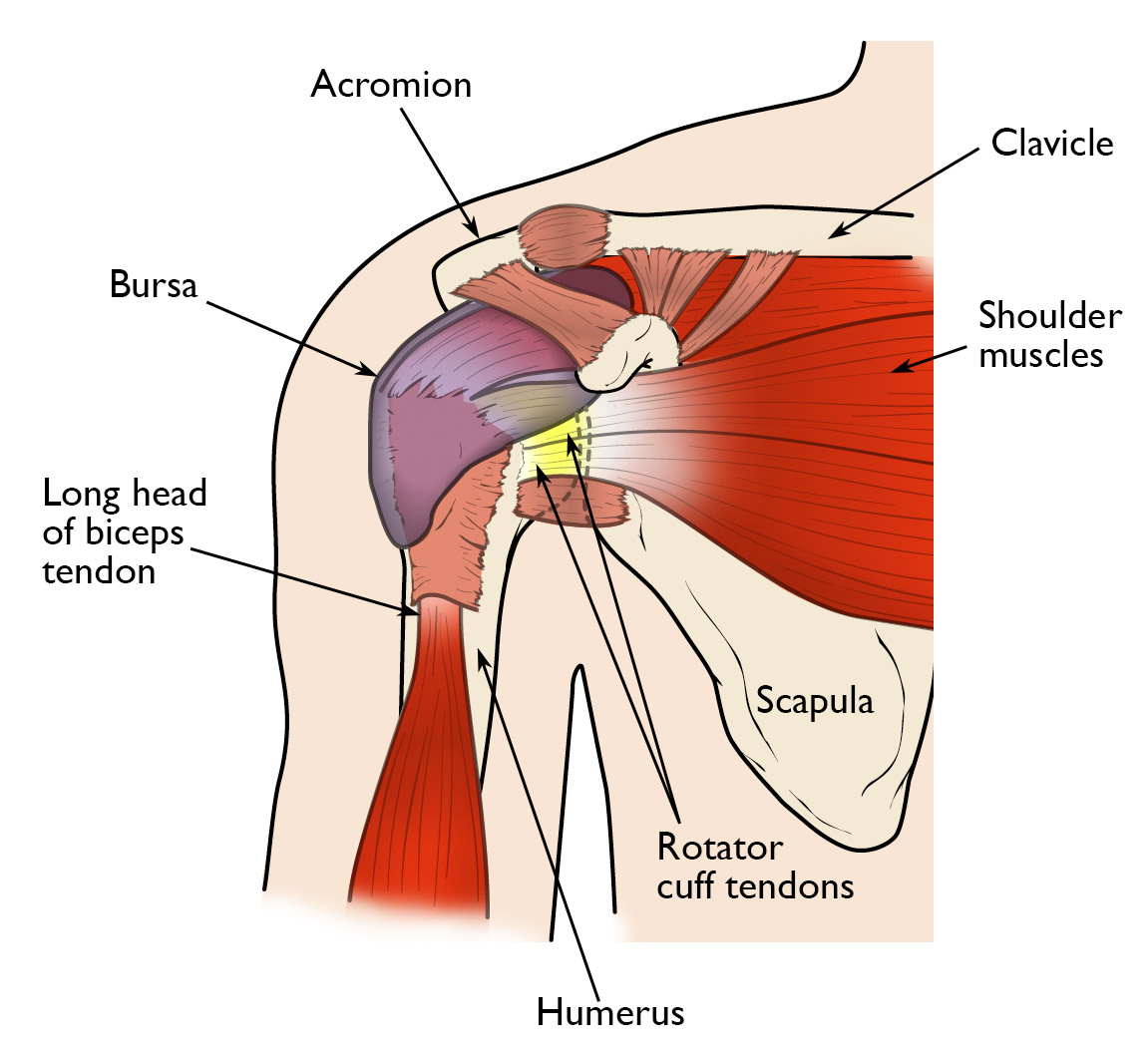
The shoulder is made up of three bones:
- The humerus (upper arm bone)
- The scapula (shoulder blade)
- The clavicle (collarbone)
The rotator cuff tendons attach to the top of the humerus (humeral head) and connect the humerus to the shoulder blade's socket (glenoid) to allow you to move your shoulder and arm.
Cause and Risk Factors
- Adults between the ages of 30 and 60 have an increased risk of calcific tendinitis, but the condition can happen to anyone.
- It is slightly more common in women than men.
- It can occur in one or both shoulders.
- Currently, the cause is unknown, but it may be associated with tendon overuse.
Symptoms
- Pain and tenderness in the front or side of the shoulder
- Pain that may be severe and may occur without trauma or movement
- Loss of motion or the sensation of stiffness
Doctor Examination
Medical History and Physical Examination
After discussing your symptoms and medical history, your doctor will examine your shoulder.
- They will press on different parts of your shoulder to see whether it is tender in any specific area.
- They will ask you to move your arm in several different directions to evaluate your motion.
- If you have severe pain and cannot move your arm on your own, your doctor may gently move the arm for you to assess the degree of stiffness.
- They will test your arm strength.
- They will check for other possible associated problems with your shoulder.
Imaging Tests
Your doctor may order imaging tests to help confirm the diagnosis.
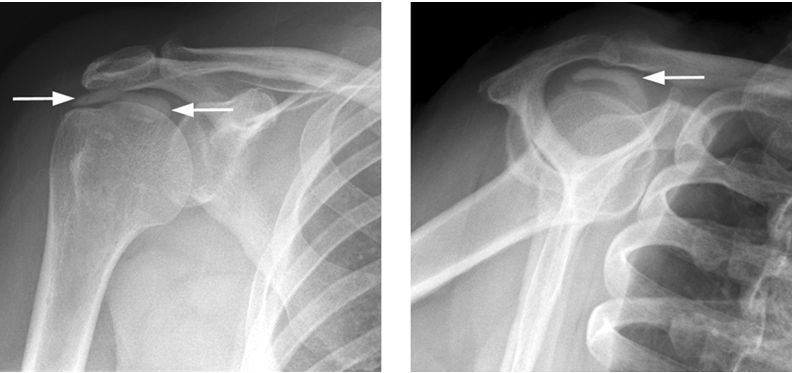
X-rays. X-rays do not show the soft tissues of your shoulder, like the rotator cuff; however, X-rays of the shoulder can show the calcium deposits around the rotator cuff.
Magnetic resonance imaging (MRI). MRI scans provide images of the surrounding soft tissue structures. They can show fluid, inflammation, or tears in or around the rotator cuff. An MRI can also confirm whether there is any calcium build-up within the rotator cuff tendons.

Treatment
The goal of treatment is to reduce pain and restore function. In planning your treatment, your doctor will consider your age, activity level, and general health.
Nonsurgical Treatment
In most cases, initial treatment is nonsurgical. Many patients experience a gradual improvement and return to function, although it may take several weeks to months for complete recovery.
Rest. Your doctor may suggest avoiding activities that tend to cause or increase your symptoms.
Nonsteroidal anti-inflammatory drugs (NSAIDs). Anti-inflammatory medications like ibuprofen, aspirin, and naproxen reduce pain and swelling.
Physical therapy. A physical therapist will focus on restoring motion to your shoulder. Stretching exercises to improve motion are very helpful. When motion and pain have improved, you may begin strengthening exercises.
Corticosteroid injection. If other treatments do not help your pain, an injection of a local steroid may be helpful. Steroids are anti-inflammatory medicines. The steroid is usually injected into the bursa beneath the acromion. This can be done in the doctor's office, with or without the use of ultrasound to guide the injection.
Shock wave therapy. Shockwaves can be generated by specialized machines to deliver energy to the deep tissues of the shoulder. This may break up calcium deposits and promote healing, with the goal of minimizing pain.
Saline lavage. For a saline lavage, the doctor inserts a needle into the calcium deposits and injects saline with the goal of breaking up the deposits. This is often done under ultrasound (image) guidance. Once the deposits are broken up, they can essentially be sucked out of the tendon. This procedure may or may not be combined with a corticosteroid injection.
Surgical Treatment
When nonsurgical treatment does not relieve pain, your doctor may discuss surgery.
The goal of surgery is to remove the calcium and repair any associated tear of the rotator cuff tendons.
These procedures are typically performed arthroscopically and may be performed along with other procedures.
In arthroscopy, specialized surgical instruments are inserted into the shoulder through small poke holes. The doctor examines your shoulder using a fiberoptic camera. The image is projected onto a large video monitor. Using this video guidance, the surgeon then inserts instruments through other small incisions to remove the calcium.
After removing the calcium, your surgeon may need to treat other conditions present in the shoulder — for instance, repairing damaged rotator cuff tendons.
Rehabilitation. After surgery, your arm may be placed in a sling for a short period of time. This allows for healing. As soon as your comfort allows, your doctor may remove the sling so you can begin shoulder exercises and start using your arm. The amount of time in the sling may be adjusted based on any additional procedures performed, as well as the amount of calcium deposit.
Your doctor will provide a rehabilitation program based on your specific case, your needs and the findings at surgery. This will include exercises to regain motion of the shoulder and strength of the arm. It typically takes 2 to 4 months to achieve complete relief of pain, but it may take up to 1 year.
Contributed and/or Updated by
Peer-Reviewed by
AAOS does not endorse any treatments, procedures, products, or physicians referenced herein. This information is provided as an educational service and is not intended to serve as medical advice. Anyone seeking specific orthopaedic advice or assistance should consult his or her orthopaedic surgeon, or locate one in your area through the AAOS Find an Orthopaedist program on this website.