






Diseases & Conditions
Arthritis of the Thumb
Arthritis is a condition where the cartilage inside a joint breaks down or wears down over time. In the thumb, the most common site for arthritis to develop is the joint at the base of the thumb — also known as the thumb carpometacarpal (CMC) joint.
Although there are several types of arthritis, the one that most often affects the base of the thumb is osteoarthritis (degenerative, or wear-and-tear, arthritis).
Anatomy of the Thumb
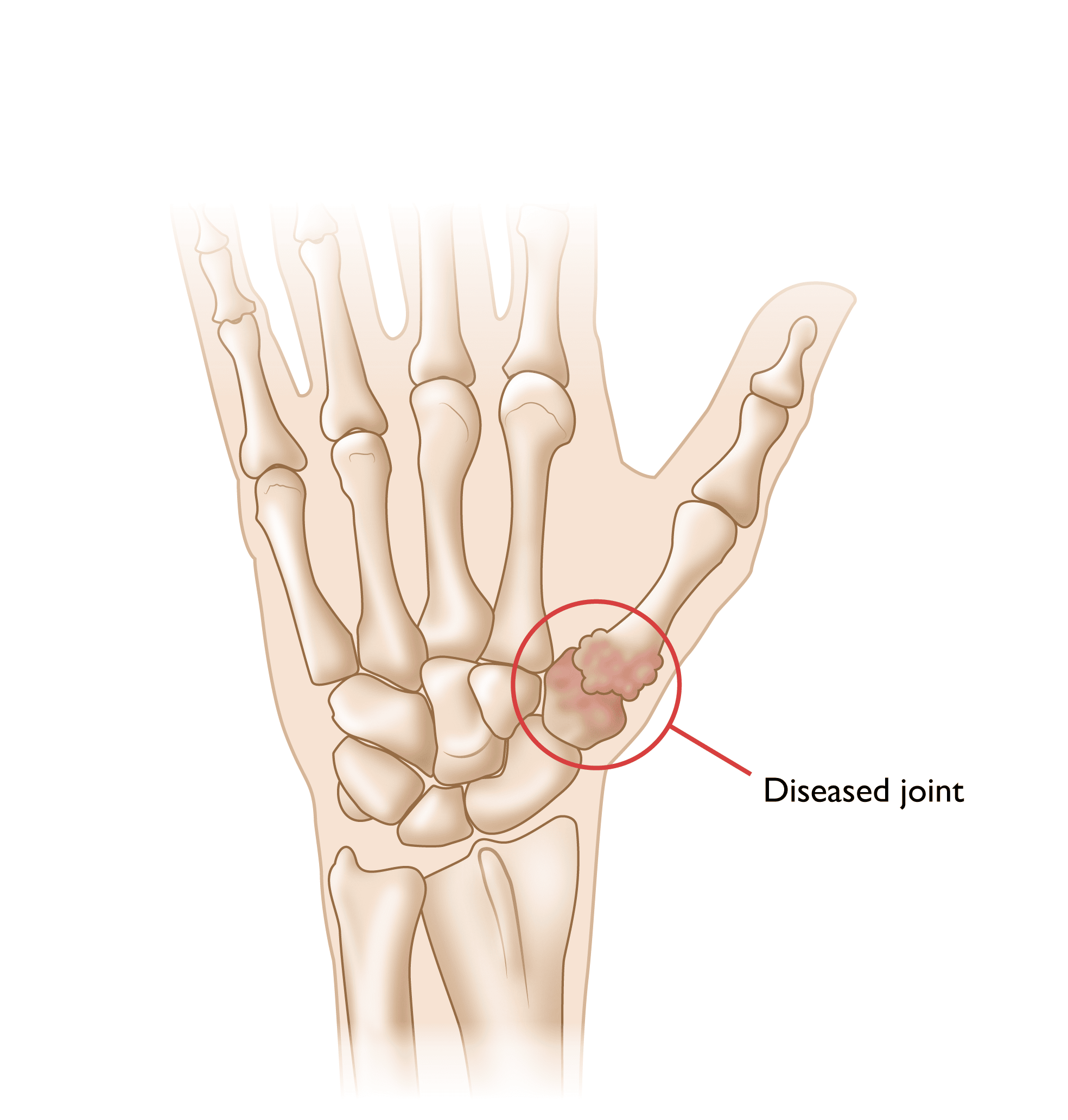
Smooth cartilage covers the ends of the bones. It enables the bones to glide easily in the joint. Without it, bones rub against each other, causing friction and damage. Osteoarthritis occurs when the cartilage begins to wear away, typically due to age and use.
The joint at the base of the thumb, or thumb CMC joint, is located near the wrist and at the fleshy part of the thumb. It enables the thumb to swivel, pivot, and pinch so that you can grip things in your hand. This joint is highly vulnerable to arthritis as people age, and arthritis at the base of the thumb is very common.
Causes of Thumb Arthritis
Thumb CMC arthritis happens when the cartilage inside the joint wears down over time. When the cartilage wears down, the bones begin to rub together, causing pain. Some things can make you more likely to get this condition:
- Being female: Women are 2 to 3 times more likely to get this condition
- Being over the age of 50: With time, there is wear and tear on the joint that breaks down the cartilage
- Having a family member with the same condition
- Being overweight
- Having a past injury to the thumb or wrist
- Having "loose" joints
- Doing jobs or activities that involve a lot of gripping, pinching, or heavy lifting
- Smoking
Symptoms of Thumb Arthritis
Thumb CMC arthritis typically develops gradually, with symptoms growing worse over time. Symptoms can include:
- Pain at the base of the thumb, especially with gripping, pinching, or turning activities (e.g., turning a key or opening a jar)
- Pain or aching after using the thumb for a long time
- Pain at night
- Weakness when gripping or pinching
- Swelling and tenderness at the base of the thumb
- A bump or bony growth at the base of the thumb
- Limited motion in the thumb
Diagnosing Thumb Arthritis
During your appointment, your doctor will:
- Ask about your symptoms, any past injuries to your hand and thumb, and any activities that worsen pain.
- Examine your hand and thumb, including:
- Checking for tenderness and swelling at the base of the thumb.
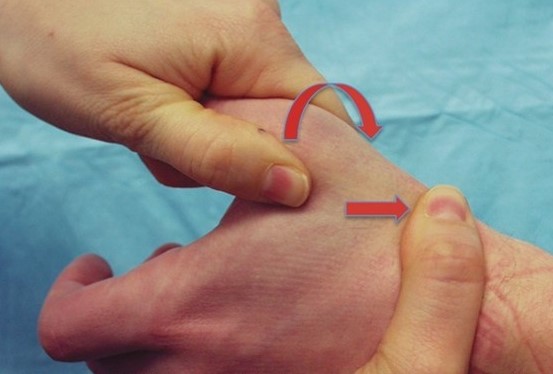
- Checking to see how well your thumb moves. One of the tests they might use to do this involves holding the joint firmly while moving the thumb. If this causes pain, a gritty feeling, or a grinding sensation, arthritis of the joint is suspected.
X-rays help make the diagnosis. They can show signs of joint damage, such as the space between the bones getting smaller or extra bone growth around the joint.
Your doctor may also check for signs of carpal tunnel syndrome, since many people with thumb CMC arthritis have both.
Treatment for Thumb Arthritis
Nonsurgical Treatment
Thumb CMC arthritis can be managed without surgery in many cases. Options include:
- Ice. Applying ice to the joint for 5 to 15 minutes several times a day can help with pain and swelling.
- Activity modification. To reduce pain of the thumb, avoid both activities that make symptoms worse and using tools and equipment.
- Splinting. A splint that supports the base of the thumb can reduce pain during activities or overnight.
- Exercises. Gentle exercises can improve the range of motion and strengthen the muscles of the thumb. These can be done with a hand therapist.
- Medications. Non-steroidal anti-inflammatory drugs (NSAIDs) such as ibuprofen or naproxen can help with pain. A topical NSAID gel (such as diclofenac) applied directly to the joint is another option and may have fewer side effects than oral medications.
- Injections. A steroid shot directly into the joint is an option. While the injection can provide relief in some people, the effect may wear off over time. There are also risks, which your doctor will discuss with you.
- Awareness. Some patients are reassured by knowing that this condition is not dangerous. In many people, it may become less bothersome over time with or without any specific treatment, and they are able to change their activities to work around any hand problems.
Because arthritis usually progresses over time, your symptoms may or may not worsen over time. However:
- Some people have no symptoms despite X-rays that show advanced arthritis.
- Some patients with thumb CMC joint arthritis will find that their thumbs may be painful for some time but that with or without treatment, their pain may go away.
Surgical Treatment
If nonsurgical treatment is no longer effective, surgery is an option. The operation can be performed on an outpatient basis, meaning you go home the same day.
There are several procedures available. Research has shown that no single approach is better than the others at relieving pain and improving function.
- One option involves removing a small wrist bone at the base of the thumb. This relieves pain and allows the thumb to keep moving. This is the most commonly performed surgery for this condition in the U.S. Many variations of this surgery exist. In some, a tendon, a strong cord of tissue that connects muscle to bone, may also be used to support or cushion the thumb.
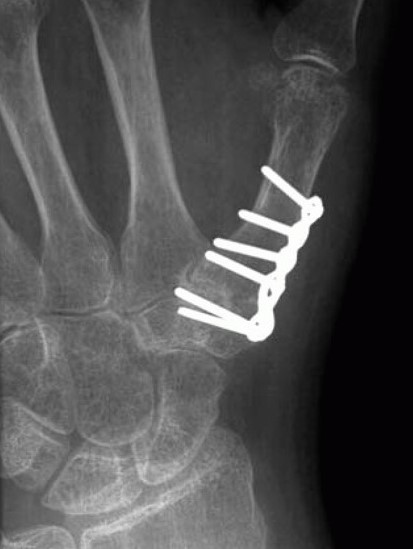
- Another option involves fusing the bones of the joint together. This reduces pain and allows for a strong pinch, but it will limit the movement of the thumb.
- Thumb CMC arthroplasty. Another option is to remove part of the joint and suspend the remaining thumb using a tendon in your wrist or a medical device. This procedure alleviates pain and allows for continued motion of the thumb.
- Sometimes, the surgeon can remove the damaged part of the joint and replace it with a metal or metal and plastic implant. Recently available devices for this surgery have promising early results but less is known about the long-term results. In the past, many different devices have been used, and some have been discontinued because of problems.
You and your doctor will discuss the options and select the one that is best for you.
Rehabilitation After Surgery
After surgery, you will have to wear a cast or splint for 4 to 8 weeks, depending on which procedure you had.
A hand therapist may work with you to help you get back movement and strength in your hand. Some soreness early in the program is normal and should get better over time.
Full recovery from surgery takes several months. The strength of your gripping will continue to improve for up to 9 to 12 months after surgery. Most patients are able to return to their normal activities.
Outcomes
Thumb CMC arthritis is not a dangerous condition and is very common. Often, symptoms can be managed with non-operative treatments.
Thumb CMC arthritis on X-rays is very common, but many people do not have symptoms. Some patients who do have symptoms find that their symptoms go away over time, with or without treatment.
Contributed and/or Updated by
Peer-Reviewed by
AAOS does not endorse any treatments, procedures, products, or physicians referenced herein. This information is provided as an educational service and is not intended to serve as medical advice. Anyone seeking specific orthopaedic advice or assistance should consult his or her orthopaedic surgeon, or locate one in your area through the AAOS Find an Orthopaedist program on this website.